Angelo has put up a great post on the D.C. trip by Friends of the Monument to support Kilili's bill.
This coming week we have WESPAC in Saipan for one of its meetings. They want to hear from fishermen, because they're all about fishing.
The ocean is ours to protect, so it's good to read up on these things and do whatever we can. If we overfish, we won't have any fish in the future, and our oceans are already dying. It's important to stay informed.
Showing posts with label National Marine Monument. Show all posts
Showing posts with label National Marine Monument. Show all posts
Friday, March 19, 2010


Tuesday, March 2, 2010
New York Times
This article, published in the New York Times by a Greenwire writer, gives more publicity to the NMI's position on the National Marine Monument.
__________________________________________________
Yesterday it was misty and drizzly and overcast, but none of that seems to have provided much relief from the general feeling that it is very dry here. Cool winds last night made for perfect sleeping weather.
__________________________________________________
Yesterday it was misty and drizzly and overcast, but none of that seems to have provided much relief from the general feeling that it is very dry here. Cool winds last night made for perfect sleeping weather.
Friday, March 20, 2009
342. BREAKING NEWS
I got a phone call this morning from Wendy Chavez of the Environmental Protection Agency.
FRIENDS OF THE MONUMENT has been selected as a winner for the region 9 awards this year! YAY! She said it was a "tight" competitive process, and that more than 200 nominations (in all categories) were received and 40 winners selected. Awards ceremony will be April 16, 2009.
I received the notice because I nominated the organization for the award. You can see my earlier post about the EPA award here.
Congrats to Friends of the Monument!
And follow up on Angelo's breaking news: a link re Jane Lubchenco confirmed as new NOAA chief.
FRIENDS OF THE MONUMENT has been selected as a winner for the region 9 awards this year! YAY! She said it was a "tight" competitive process, and that more than 200 nominations (in all categories) were received and 40 winners selected. Awards ceremony will be April 16, 2009.
I received the notice because I nominated the organization for the award. You can see my earlier post about the EPA award here.
Congrats to Friends of the Monument!
And follow up on Angelo's breaking news: a link re Jane Lubchenco confirmed as new NOAA chief.
Tuesday, March 10, 2009
338. Federal Officials
I've met a lot of federal officials over the past two days.
 Marine Monument
Some top officials from Fish & Wildlife are here about the Marine Monument--Barbara Maxfield, Barry Stieglitz, Donald Palawski; and also from NOAA--William Robinson. They are meeting with local government officials and conducting their first field review about the national marine monument, designated in January 2009 by then-President Bush.
They have the words of the proclamation and of the designation of DFW as lead agency, but apparently a lot of the groundwork, fieldwork, and framework from the process leading up to the designation has been lost by the change in Presidential administrations.
Here's what I understood would be two of the first agenda items for the Monument management:
1) fishing regulations, which are on the agenda for the next Wespac meeting scheduled for March 17-19, 23-25, 2009 in PagoPago, American Samoa; and
2) NEPA--environmental impact statements. There is a lot of groundwork that goes into one of these; and apparently DFW is looking to get started on the baseline fundamentals. (Lauri, Angelo--please correct me if I got this wrong...)
There is no fixed timeline, but some targeted dates:
4/11/2009--advisory council in place. This date is based on the proclamation language "within 3 months of the date of this proclamation." It is unlikely that this date will be met since the appointment is by the Secretaries of Commerce and Interior, and right now we don't yet have a Secretary of Commerce, although President Obama has nominated Gary Locke.
Governor Fitial's selections may not qualify, either, as the proclamation requires that the advisors be members of the local government.
8/2010--I think this was the target date for draft regulations, with the hope that they would be in place by 12/2010.
2011--Monument included in 2011 budget. It seems to be already too late to include the monument in the 2010 budget. It may be too late for the 2011 budget...
2013--full operation of Monument.
 USCIS Application Support Center
 Today marked the official opening of the US Citizenship and Immigration Service's Application Support Center in Saipan. This is part of the operation to federalize immigration here.
Present for the ceremony were Michael Aytes--Acting Deputy Director of USCIS, Carolyn Muzyka--Regional Director of the Western Region of USCIS, David Gulick--District Director headquartered in Honolulu, HI, and Walter Haith--Field Office Director from Guam. Other dignitaries came as well, including TSA official (Michael Connolly?), federal Court Judge Munson, DOI representative Jeff Schorr, and CNMI dignitaries including Governor Benigno Fitial, Mayor Juan B. Tudela, and Immigration Chief Mel Grey.
The ASC office is open and has the capacity to do "biometrics"--meaning fingerprinting, photographing, and getting electronic signatures. The staff gave a quick demonstration of how they do these. They have already been doing these things since 3/2/2009, but there is a small snafu for those applying for green cards. Right now USCIS still reads the various laws as requiring "admission upon inspection" and therefore says applicants must still travel to Guam. They are looking into the possibility of changing that, and will change it for sure on the start date of the federalization/transition.
There is some strong speculation that the start date will be delayed and that federalization will not start on June 1, 2009. It can be delayed as much as six months (to 12/1/2009), but could also be delayed for a shorter period of time.
The problem from the USCIS point-of-view seems to be that regulations are not in place, and the time for getting them in place is running out. USCIS does not want to start operation without regulations already in place. Given that regs usually need a 60 day comment period and then republication in adopted form, and we only have about 82 days from now before June 1, 2009, it seems like the time is too limited for a prompt start.
The USCIS officials present were an interesting mix of diplomat and bureaucrat. They got in their soundbites--about being a service provider, about wanting to do things right, about being available and open for comment and information, but they also didn't answer some direct questions, like whether there would be a delay in the start-up date. They expressly denied that there would be any amnesty by the agency, although they acknowledged that Congress could move in that direction.
They also have a policy man in the Saipan office--Fred Ongcapin--who is here to get a better grasp of some of the trickier issues and then go back to Washington and work on them.
All in all, the prospects from today's events seemed hopeful.
 Marine Monument
Some top officials from Fish & Wildlife are here about the Marine Monument--Barbara Maxfield, Barry Stieglitz, Donald Palawski; and also from NOAA--William Robinson. They are meeting with local government officials and conducting their first field review about the national marine monument, designated in January 2009 by then-President Bush.
They have the words of the proclamation and of the designation of DFW as lead agency, but apparently a lot of the groundwork, fieldwork, and framework from the process leading up to the designation has been lost by the change in Presidential administrations.
Here's what I understood would be two of the first agenda items for the Monument management:
1) fishing regulations, which are on the agenda for the next Wespac meeting scheduled for March 17-19, 23-25, 2009 in PagoPago, American Samoa; and
2) NEPA--environmental impact statements. There is a lot of groundwork that goes into one of these; and apparently DFW is looking to get started on the baseline fundamentals. (Lauri, Angelo--please correct me if I got this wrong...)
There is no fixed timeline, but some targeted dates:
4/11/2009--advisory council in place. This date is based on the proclamation language "within 3 months of the date of this proclamation." It is unlikely that this date will be met since the appointment is by the Secretaries of Commerce and Interior, and right now we don't yet have a Secretary of Commerce, although President Obama has nominated Gary Locke.
Governor Fitial's selections may not qualify, either, as the proclamation requires that the advisors be members of the local government.
8/2010--I think this was the target date for draft regulations, with the hope that they would be in place by 12/2010.
2011--Monument included in 2011 budget. It seems to be already too late to include the monument in the 2010 budget. It may be too late for the 2011 budget...
2013--full operation of Monument.
 USCIS Application Support Center
 Today marked the official opening of the US Citizenship and Immigration Service's Application Support Center in Saipan. This is part of the operation to federalize immigration here.
Present for the ceremony were Michael Aytes--Acting Deputy Director of USCIS, Carolyn Muzyka--Regional Director of the Western Region of USCIS, David Gulick--District Director headquartered in Honolulu, HI, and Walter Haith--Field Office Director from Guam. Other dignitaries came as well, including TSA official (Michael Connolly?), federal Court Judge Munson, DOI representative Jeff Schorr, and CNMI dignitaries including Governor Benigno Fitial, Mayor Juan B. Tudela, and Immigration Chief Mel Grey.
The ASC office is open and has the capacity to do "biometrics"--meaning fingerprinting, photographing, and getting electronic signatures. The staff gave a quick demonstration of how they do these. They have already been doing these things since 3/2/2009, but there is a small snafu for those applying for green cards. Right now USCIS still reads the various laws as requiring "admission upon inspection" and therefore says applicants must still travel to Guam. They are looking into the possibility of changing that, and will change it for sure on the start date of the federalization/transition.
There is some strong speculation that the start date will be delayed and that federalization will not start on June 1, 2009. It can be delayed as much as six months (to 12/1/2009), but could also be delayed for a shorter period of time.
The problem from the USCIS point-of-view seems to be that regulations are not in place, and the time for getting them in place is running out. USCIS does not want to start operation without regulations already in place. Given that regs usually need a 60 day comment period and then republication in adopted form, and we only have about 82 days from now before June 1, 2009, it seems like the time is too limited for a prompt start.
The USCIS officials present were an interesting mix of diplomat and bureaucrat. They got in their soundbites--about being a service provider, about wanting to do things right, about being available and open for comment and information, but they also didn't answer some direct questions, like whether there would be a delay in the start-up date. They expressly denied that there would be any amnesty by the agency, although they acknowledged that Congress could move in that direction.
They also have a policy man in the Saipan office--Fred Ongcapin--who is here to get a better grasp of some of the trickier issues and then go back to Washington and work on them.
All in all, the prospects from today's events seemed hopeful.
Thursday, January 29, 2009
Obama's Secretary of Commerce-still waiting?
We're still waiting on President Obama to name someone to the position of Secretary of Commerce. Recent reports show two names have surfaced in the pool of possibilities: John Thompson, a Symantec CEO; and Padrasmee Warrior, CTO of CISCO. According to Reuters' report, John Thompson has the edge right now. According to CBS, he's got the job.
Other past rumors of contenders for the post included wealthy Penny Pritzker.
The CNMI needs to pay attention because the Secretary of Commerce has duties that directly impact on our situation here, including (but not limited to) a leading role in the National Marine Monument.
Other past rumors of contenders for the post included wealthy Penny Pritzker.
The CNMI needs to pay attention because the Secretary of Commerce has duties that directly impact on our situation here, including (but not limited to) a leading role in the National Marine Monument.
Friday, January 23, 2009
318. A Response to Lino Olopai
I read Lino's letter in the Saipan Tribune with some reluctance and hesitation. I like and respect Lino, but I often find myself at odds with some of his philosophies. I don't think this is because I'm "American" and he's "Indigenous Carolinian." I think we just think differently.
So I read it and found it interesting. Here is the letter with my responses and comments.
Friday, January 23, 2009
A done deal I took this to mean recognition that the Monument is now a reality. I think, after reading the letter, it was meant to suggest that it was always going to happen and we just didn't know that. I don't believe it. As a supporter, I know that we were on tenterhooks about what would happen. I sat in on phone calls from Pew representatives Jay Nelson and Matt Rand where we were scrambling for more strategies and ideas on what else we could do to campaign for the monument designation. I never had the sense that anyone at Pew Ocean Legacy or in Friends of the Monument felt the decision was "in the bag." In fact, towards the end, I was completely convinced that Bush would designate only Rose Atoll and Palmyra Islands and delete the Marianas from the proposal.
I am not surprised to learn that President Bush approved the marine monument. I've always suspected from the beginning that the monument is not for conservation, but for homeland security, military use and the enhancement of President Bush's image. None of us know why President Bush decided to sign the designation. I do not discount these possible motivations. The last, I think, might have improved his approval rating among the public from 12% to 13% where it ended when he left office. EDIT: actually President Bush's lowest rating was 20%; it ended at a 22% approval rating.
I especially do not believe the statements of Council of Environmental Quality chair James Connaughton and President Bush that the native islanders' (Chamorro and Refalawash) concerns will be protected. I think this might depend on what those concerns are. CEQ chair is a politician-we must be skeptical about what all politicians say. OTOH, the Hawaiian monument Papahanaumokuakea has many features in its regulations that address indigenous rights and concerns. I think we'll see some of this, too.
The marine monument was a done deal from the beginning. Pew was only used, for over two years, to pave a pathway for President Bush to approve the marine monument. Chairman Connaughton and his group knew of Pew's propaganda, but were never present to lend a helping hand, not until just a few months ago. It's a very well executed plan! See my comment above. I disagree. I don't think there was some grand conspiracy. I think Pew's Ocean Legacy thought it would be a good plan, wanted it, and promoted it. But Bush is the "decider"-haha!- and also unpredictable, in my opinion. I don't think we would have seen the division between Cheney and Laura Bush is this was some well-orchestrated predetermined plan.
I also do not believe Pew and their proponents when they profess that designation of the monument is in the best interest of the native islanders, and that we shouldn't let it pass us by. “A win-win situation, job opportunities, we will be known all over the world, become rich and famous,” etc, etc... I've heard these types of remarks from “salesmen” too many times before! I also know that it has misled lots of people, including our leaders, both local and federal. I'm not a "Pew proponent" but a Friend of the Monument. I do think this opportunity is good for the CNMI, including native islanders. The CNMI has already given constitutional protection to the three northernmost islands. Unfortunately, because of the court rulings on the EEZ, the CNMI could not give the same kind of protection to the waters surrounding the islands. This designation does that. There will be some benefits. We've already had an enormous amount of free publicity around the world. We will see scientists coming here. We will get a Visitors' Center paid for by the US Government. We will get a boat that the CNMI will use for northern island trips. There will be some jobs created by this. We will NOT all become rich and famous-and I don't think any Monument supporter said that. And it won't happen overnight, because it will take a couple of years before we even have the Monument plan completed and put into effect.
I am equally disappointed by our elected leader's lack of a strong united stand in protecting what is rightfully ours. Here, I think Lino means Fitial, Arnold Palacios, Pete Reyes all in the end "agreed" to the Monument. For me, this is a sign of intelligence, to be able to change your mind. But I can see this from Lino's POV also. Like I said above, when dealing with politicians, remain skeptical.
A third of our ancestral land and ocean represents a big chunk that has been taken away from our already small islands. This seems to be saying that the Monument took 1/3 of the CNMI's ocean and land. If so, this is a misstatement of fact. As noted above, the waters and submerged land were held by Court decision to have passed to the US by virtue of the Covenant. The Court held that the transfer happened decades ago, although the decision was only recently issued. You may disagree with the court decision. There are a lot of court decisions I disagree with. But we live with them. They become the law and the reality. Even if there were no Monument, this water and submerged land would be "owned" or "controlled" by the U.S. Also, no "ancestral land" is involved in the Monument. No island land is part of the Monument. It's only the water and submerged land.
Perhaps we have forgotten the teachings of our ancestors that the land, ocean, and our people will always be our most precious natural resources. Our islands are but a grain of sand in the middle of the ocean, and our resources are different from those of the continental United States and other big countries. The exploitation of natural gas, oil, minerals, diamonds, gold, etc., are contrary to the teachings of our ancestors and these activities contribute a lot to global warming. They even kill and destroy each other for such things! This is the statement I find most puzzling. I completely agree with it. Nothing in this statement supports opposing the Monument. In fact, it is the very unique nature of the Marianas Trench and eco-systems that abound here that make this place worth preserving and protecting with the maximum amount of law and help possible. The Monument designation will help prevent the damage that greed and exploitation would cause.
Is it true that the federal government will return our submerged lands should we agree to the marine monument? Actually, the US Department of Interior has been offering to support legislation that would give 3 miles EEZ to the CNMI since before the Court of Appeals affirmed the lower court's holding that said the CNMI owns nothing. Support of the Marine Monument was not a condition for this proposal, although, as I understand it, the offer was renewed in the context of the Marine Monument discussions.
Returning something that is ours in exchange for something that is also ours? I once represented a family that had used land according to a "partida" for 40 years before the Court held there was no effective partida. I completely thought the decision was wrong, but it was upheld on appeal. It took another decade for the family to finally come to grips with the fact that they would have to accept the court ruling as the way it is going to be. But here, it doesn't seem that Lino will ever accept the court ruling on the submerged lands. I understand that sentiment. But it undermines the argument somewhat when the premise-that the CNMI owns the submerged lands and waters-has already been ruled in Court to be false.
Did our elected leaders fall for this, or is it the same old federal government's pathetic attitude where they made themselves believe that one size shoe fits the whole world? It seems to me like, “in search of weapons of mass destruction.” Same comment as above.
The 1906 Antiquities Act that President Bush utilized should be stricken from the book. It's an outdated and very inhumane Act. I still can't bring myself to believe that, with a stroke of the President's pen, an area will become a monument without consultation or due regard to the people there, especially to those that will be affected the most. Needless to say, human rights, be it native islanders, American Indians, or others, must be respected. This is a very legitimate concern. The Antiquities Act is a very strange law that puts a lot of power in the hands of the President, with very little checks and balances. I say very little, because of course Congress does have the power to repeal or modify the law. I think that Kilili would find some support in the Legislature for a bill that said the President could make no further declarations of Monuments in the Pacific without Congressional approval. That's been done regarding other states that already have a lot of Monument acreage. All that said, though, the "worst" that is done by an Antiquities Act declaration is PRESERVATION, protection of the status quo. And that's not a bad thing.
The manner in which the marine monument proposal was presented to us has been especially insulting for me, to our traditional leaders, and was very disrespectful to the Association of Pacific Island Legislature, Micronesian Chief Executive Summit, Guam Fisherman's Co-op, 29th Guam Legislature, Rep. Madeline Bordallo, and others that stood firm with us in our belief in protecting what is rightfully ours. I do not believe that the Native Islanders are so arrogant not to share whatever small resources they may have. I believe that all we wanted to say was which resource should be shared and how much. I'm very sorry that anyone was offended. I'm not quite sure how things could have been done differently, in the framework of the Antiquities Act. An idea was presented, and Pew Ocean Legacy people sought local support immediately by first contacting Diego Benavente and Jacinta Kaipat. Diego-with his ties to Wespac-had no interest in supporting the measure. Cinta-coming from her experience in the Northern Islands and with Beautify CNMI-did. Lots of public information was handed out. Meetings were held. VERY high ranking US officials came to the CNMI to hear what we had to say. Some people will be offended whenever their opinion doesn't win the day.
BTW, It's not too late for indigenous input. Regulations will be drafted-stay tuned and comment. Indigenous matters will be decided-stay tuned and monitor what is going on, speak up. BUT ALSO, recognize that 6,000 real people signed petitions in support of the Monument. People here in the CNMI. People of all ethnicities, including LOTS of indigenous. Do not offend them by acting to speak against the Monument as if there is only one indigenous opinion.
Our relation with the United States under the Covenant is that we're neither a state, union, territory, but we are in a “political union” with the United States. Um, actually, we are a territory. We have a different legal underpinning than other territories, but we're still a territory. Yes, we're in political union with the U.S, but funny, how people touting the Covenant forget to mention that the Covenant itself says we are "under" the sovereignty of the U.S. as well as being in political union with it.
Does the 1906 Antiquities Act apply to us under this relationship since we are not a territory of the United States? It does. The Covenant itself provides a formula for determining what federal laws apply here. Generally, if it applies in Guam, it applies here. And as noted above, the Antiquities Act applies to land within the U.S's ownership and control. The EEZ here falls within that definition.
I guess whatever questions we may ask, our plans for our islands will no longer be valid since they're in the hands of the federal government. Wrong. The plans will be forged by various agencies working together, including the CNMI Government.
Perhaps the new administration will listen to our concerns. We all have hopes for the new administration. It is going to be better than the one we just had. We just don't know how, yet.
Lino M. Olopai
Chalan Kanoa, Saipan
So I read it and found it interesting. Here is the letter with my responses and comments.
Friday, January 23, 2009
A done deal I took this to mean recognition that the Monument is now a reality. I think, after reading the letter, it was meant to suggest that it was always going to happen and we just didn't know that. I don't believe it. As a supporter, I know that we were on tenterhooks about what would happen. I sat in on phone calls from Pew representatives Jay Nelson and Matt Rand where we were scrambling for more strategies and ideas on what else we could do to campaign for the monument designation. I never had the sense that anyone at Pew Ocean Legacy or in Friends of the Monument felt the decision was "in the bag." In fact, towards the end, I was completely convinced that Bush would designate only Rose Atoll and Palmyra Islands and delete the Marianas from the proposal.
I am not surprised to learn that President Bush approved the marine monument. I've always suspected from the beginning that the monument is not for conservation, but for homeland security, military use and the enhancement of President Bush's image. None of us know why President Bush decided to sign the designation. I do not discount these possible motivations. The last, I think, might have improved his approval rating among the public from 12% to 13% where it ended when he left office. EDIT: actually President Bush's lowest rating was 20%; it ended at a 22% approval rating.
I especially do not believe the statements of Council of Environmental Quality chair James Connaughton and President Bush that the native islanders' (Chamorro and Refalawash) concerns will be protected. I think this might depend on what those concerns are. CEQ chair is a politician-we must be skeptical about what all politicians say. OTOH, the Hawaiian monument Papahanaumokuakea has many features in its regulations that address indigenous rights and concerns. I think we'll see some of this, too.
The marine monument was a done deal from the beginning. Pew was only used, for over two years, to pave a pathway for President Bush to approve the marine monument. Chairman Connaughton and his group knew of Pew's propaganda, but were never present to lend a helping hand, not until just a few months ago. It's a very well executed plan! See my comment above. I disagree. I don't think there was some grand conspiracy. I think Pew's Ocean Legacy thought it would be a good plan, wanted it, and promoted it. But Bush is the "decider"-haha!- and also unpredictable, in my opinion. I don't think we would have seen the division between Cheney and Laura Bush is this was some well-orchestrated predetermined plan.
I also do not believe Pew and their proponents when they profess that designation of the monument is in the best interest of the native islanders, and that we shouldn't let it pass us by. “A win-win situation, job opportunities, we will be known all over the world, become rich and famous,” etc, etc... I've heard these types of remarks from “salesmen” too many times before! I also know that it has misled lots of people, including our leaders, both local and federal. I'm not a "Pew proponent" but a Friend of the Monument. I do think this opportunity is good for the CNMI, including native islanders. The CNMI has already given constitutional protection to the three northernmost islands. Unfortunately, because of the court rulings on the EEZ, the CNMI could not give the same kind of protection to the waters surrounding the islands. This designation does that. There will be some benefits. We've already had an enormous amount of free publicity around the world. We will see scientists coming here. We will get a Visitors' Center paid for by the US Government. We will get a boat that the CNMI will use for northern island trips. There will be some jobs created by this. We will NOT all become rich and famous-and I don't think any Monument supporter said that. And it won't happen overnight, because it will take a couple of years before we even have the Monument plan completed and put into effect.
I am equally disappointed by our elected leader's lack of a strong united stand in protecting what is rightfully ours. Here, I think Lino means Fitial, Arnold Palacios, Pete Reyes all in the end "agreed" to the Monument. For me, this is a sign of intelligence, to be able to change your mind. But I can see this from Lino's POV also. Like I said above, when dealing with politicians, remain skeptical.
A third of our ancestral land and ocean represents a big chunk that has been taken away from our already small islands. This seems to be saying that the Monument took 1/3 of the CNMI's ocean and land. If so, this is a misstatement of fact. As noted above, the waters and submerged land were held by Court decision to have passed to the US by virtue of the Covenant. The Court held that the transfer happened decades ago, although the decision was only recently issued. You may disagree with the court decision. There are a lot of court decisions I disagree with. But we live with them. They become the law and the reality. Even if there were no Monument, this water and submerged land would be "owned" or "controlled" by the U.S. Also, no "ancestral land" is involved in the Monument. No island land is part of the Monument. It's only the water and submerged land.
Perhaps we have forgotten the teachings of our ancestors that the land, ocean, and our people will always be our most precious natural resources. Our islands are but a grain of sand in the middle of the ocean, and our resources are different from those of the continental United States and other big countries. The exploitation of natural gas, oil, minerals, diamonds, gold, etc., are contrary to the teachings of our ancestors and these activities contribute a lot to global warming. They even kill and destroy each other for such things! This is the statement I find most puzzling. I completely agree with it. Nothing in this statement supports opposing the Monument. In fact, it is the very unique nature of the Marianas Trench and eco-systems that abound here that make this place worth preserving and protecting with the maximum amount of law and help possible. The Monument designation will help prevent the damage that greed and exploitation would cause.
Is it true that the federal government will return our submerged lands should we agree to the marine monument? Actually, the US Department of Interior has been offering to support legislation that would give 3 miles EEZ to the CNMI since before the Court of Appeals affirmed the lower court's holding that said the CNMI owns nothing. Support of the Marine Monument was not a condition for this proposal, although, as I understand it, the offer was renewed in the context of the Marine Monument discussions.
Returning something that is ours in exchange for something that is also ours? I once represented a family that had used land according to a "partida" for 40 years before the Court held there was no effective partida. I completely thought the decision was wrong, but it was upheld on appeal. It took another decade for the family to finally come to grips with the fact that they would have to accept the court ruling as the way it is going to be. But here, it doesn't seem that Lino will ever accept the court ruling on the submerged lands. I understand that sentiment. But it undermines the argument somewhat when the premise-that the CNMI owns the submerged lands and waters-has already been ruled in Court to be false.
Did our elected leaders fall for this, or is it the same old federal government's pathetic attitude where they made themselves believe that one size shoe fits the whole world? It seems to me like, “in search of weapons of mass destruction.” Same comment as above.
The 1906 Antiquities Act that President Bush utilized should be stricken from the book. It's an outdated and very inhumane Act. I still can't bring myself to believe that, with a stroke of the President's pen, an area will become a monument without consultation or due regard to the people there, especially to those that will be affected the most. Needless to say, human rights, be it native islanders, American Indians, or others, must be respected. This is a very legitimate concern. The Antiquities Act is a very strange law that puts a lot of power in the hands of the President, with very little checks and balances. I say very little, because of course Congress does have the power to repeal or modify the law. I think that Kilili would find some support in the Legislature for a bill that said the President could make no further declarations of Monuments in the Pacific without Congressional approval. That's been done regarding other states that already have a lot of Monument acreage. All that said, though, the "worst" that is done by an Antiquities Act declaration is PRESERVATION, protection of the status quo. And that's not a bad thing.
The manner in which the marine monument proposal was presented to us has been especially insulting for me, to our traditional leaders, and was very disrespectful to the Association of Pacific Island Legislature, Micronesian Chief Executive Summit, Guam Fisherman's Co-op, 29th Guam Legislature, Rep. Madeline Bordallo, and others that stood firm with us in our belief in protecting what is rightfully ours. I do not believe that the Native Islanders are so arrogant not to share whatever small resources they may have. I believe that all we wanted to say was which resource should be shared and how much. I'm very sorry that anyone was offended. I'm not quite sure how things could have been done differently, in the framework of the Antiquities Act. An idea was presented, and Pew Ocean Legacy people sought local support immediately by first contacting Diego Benavente and Jacinta Kaipat. Diego-with his ties to Wespac-had no interest in supporting the measure. Cinta-coming from her experience in the Northern Islands and with Beautify CNMI-did. Lots of public information was handed out. Meetings were held. VERY high ranking US officials came to the CNMI to hear what we had to say. Some people will be offended whenever their opinion doesn't win the day.
BTW, It's not too late for indigenous input. Regulations will be drafted-stay tuned and comment. Indigenous matters will be decided-stay tuned and monitor what is going on, speak up. BUT ALSO, recognize that 6,000 real people signed petitions in support of the Monument. People here in the CNMI. People of all ethnicities, including LOTS of indigenous. Do not offend them by acting to speak against the Monument as if there is only one indigenous opinion.
Our relation with the United States under the Covenant is that we're neither a state, union, territory, but we are in a “political union” with the United States. Um, actually, we are a territory. We have a different legal underpinning than other territories, but we're still a territory. Yes, we're in political union with the U.S, but funny, how people touting the Covenant forget to mention that the Covenant itself says we are "under" the sovereignty of the U.S. as well as being in political union with it.
Does the 1906 Antiquities Act apply to us under this relationship since we are not a territory of the United States? It does. The Covenant itself provides a formula for determining what federal laws apply here. Generally, if it applies in Guam, it applies here. And as noted above, the Antiquities Act applies to land within the U.S's ownership and control. The EEZ here falls within that definition.
I guess whatever questions we may ask, our plans for our islands will no longer be valid since they're in the hands of the federal government. Wrong. The plans will be forged by various agencies working together, including the CNMI Government.
Perhaps the new administration will listen to our concerns. We all have hopes for the new administration. It is going to be better than the one we just had. We just don't know how, yet.
Lino M. Olopai
Chalan Kanoa, Saipan
Wednesday, January 14, 2009
Environmentalist Award Goes To...
The EPA is accepting nominations according to this Saipan Tribune article for EPA's region 9 awards. The Tribune article isn't quite correct though: EPA seeks to honor environmentalists outside of EPA (not outside of the US). Anyone here in the CNMI or elsewhere is eligible.
You can nominate your choices here. The categories for nominations include 1) Environmental, community and non-profit; 2) Federal, tribal, state, or local government; 3) Individual; and 4) Business, industry, trade or professional organization.
You'll need the full name, address, and phone number for any nominee, and be willing to give the same information about yourself. You'll also need to write 500 words in support of the nomination.
I can think of many, many people who should be recognized here for outstanding contributions this year--all related to promoting the designation of the Marianas Trench National Marine Monument.
My short list for individuals:
I could add more: Jay Nelson and William Aila, as well as many of the hard-working supporters here in the CNMI like Lauri, Agnes, Chailang, Cinta, Ruth, Andrew, Ed Salas, Tina, Captain Carl, Kimberly, Brian, and more. But my short-list remains as above.
On my list for community organizations:
Deadline for submitting nominations for the EPA Region 9 awards is 2/8/2009.
Biba Monument!
Photo Credits: Angelo O. Villagomez, Brian Jones
You can nominate your choices here. The categories for nominations include 1) Environmental, community and non-profit; 2) Federal, tribal, state, or local government; 3) Individual; and 4) Business, industry, trade or professional organization.
You'll need the full name, address, and phone number for any nominee, and be willing to give the same information about yourself. You'll also need to write 500 words in support of the nomination.
I can think of many, many people who should be recognized here for outstanding contributions this year--all related to promoting the designation of the Marianas Trench National Marine Monument.
My short list for individuals:
Angelo O'Connor Villagomez
Ignacio Cabrera
Ken Kramer


I could add more: Jay Nelson and William Aila, as well as many of the hard-working supporters here in the CNMI like Lauri, Agnes, Chailang, Cinta, Ruth, Andrew, Ed Salas, Tina, Captain Carl, Kimberly, Brian, and more. But my short-list remains as above.
On my list for community organizations:
Friends of the Monument

Deadline for submitting nominations for the EPA Region 9 awards is 2/8/2009.
Biba Monument!
Photo Credits: Angelo O. Villagomez, Brian Jones
Wednesday, January 7, 2009
Monument Map

Thanks to Angelo, Pew Charitable Trust, and Friends of the Monument for the campaign to have a national marine monument designated in the CNMI. It's now official.
Of course, nothing in life is perfect.
1. The declaration doesn't specify that NOAA Sanctuaries will be in charge. While both Interior and Commerce/NOAA have responsibility, the repeated reference to "fisheries" looks like the declaration leaves the door open for Wespac to run the show. As if that could possibly be a good thing for environmental protection.
2. The Advisory Committee will be 3 CNMI government officials recommended by the Governor, along with two selections by Defense and the Coast Guard respectively.
There is NO room for indigenous or environmental advocates on the Advisory Council! Who will the Governor nominate? Fitial only agreed in the end and his "support" is untested. Besides, it seems as if his choices for appointments are limited to those working for the government, so people most qualified, like Angelo Villagomez and Ken Kramer and Ike Cabrera are not "eligible" for advisory council positions. People who ardently opposed the monument, like John Joyner and Sylvan (Igisomar?), however, are.
3. I've got no problem with allowing sustenance and traditional indigenous fishing, but... Recreational fishing? Allowed per the declaration, despite the overwhelming evidence from other marine reserves that show that recreational fishing is also destructive of habitat and, of course, marine life.
Well, that's all I can say for now
I'm sort of happy--we got a national marine monument. I'm sort of happy--it's fairly large. I'm sort of happy--we did it!!!But I'm sort of worried, too. It's not quite right.
But for now, we can bask in the tons of positive press--perhaps a first for the CNMI! (Many of these are the same AP wire news release we read in our own local newspaper.)
White House Press Release
USA Today
CNN
National Geographic
BBC
New Zealand stuff.co
Los Angeles Times
Santa Fe, New Mexico
Mother Jones
Taiwan news
China Daily
Honolulu Advertiser
Montreal
Science Magazine
Sydney Morning Herald
Reuters South Africa--I'm not sure about this link--sorry.
London Times
World Fishing Today
Guam PDN
The Times of India
France International
Qatar Tribune
There are loads more of local newspapers in the US carrying the story--from Cleveland to Miami, from Bellingham to Raleigh, etc. On the world front, Angelo reports stories also in Pakistan and Zimbabwe newspapers, but I didn't find those.
Edit: Ah, I found it. Know you've been waiting for this:
Pakistan news
Tuesday, September 23, 2008
273. The Concept Behind The Proposal
Jim Davies, in today's Tribune, writes that he has yet to see "Pew supporters offer any substantial proof to the concept behind the project."
1. We're not "Pew supporters." We're Friends of the Monument, supporters of marine conservation, people who want to preserve and protect our natural world.
2. The concept behind the project has been written about extensively--it's marine conservation. Some people have obviously missed all of the information that has been circulated about the benefits of marine conservation throughout the CNMI--not just recently, but for years. We have a lot of information, both from scientific studies and from our own experiences with the ocean.
3. The Marianas Trench Marine Monument project is essentially a project to have the U.S. Exclusive Economic Zone (EEZ) waters around Uracas, Maug, and Asuncion declared a Monument, making them a federally protected marine sanctuary. The CNMI Constitution has already made the islands themselves a CNMI land sanctuary. The proposal, if adopted, would extend the same type of protection the CNMI has given to the islands into the waters, and provide for both CNMI enforcement and federal enforcement and funding.
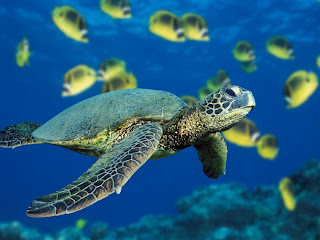
Here's a very brief synopsis of the "concept behind the project":
The world's oceans are in rapid decline. (Read the transcript of Dr. David Suzuki from the movie Empty Ocean, Empty Nets, available at habitat media online.)
It's likely to get worse: 77% of our oceans fisheries have already been fully exploited, overfished, or exhausted, based on information from the United Nations Food and Agriculture Organization; and estimates by an international team of university research scientists over a 4 year period conclude that by 2048, 90% of all (edible)marine life will be gone. (Reported in Science journal, and by many popular media like USA Today.)
Overfishing is the main reason that our marine ecosystems are depleted.
(Read about the problems, history, and potential solutions by the noted fisheries expert Dr. Daniel Pauly and others at the independent resource, overfishing.org.)
Overfishing continues to deplete our oceans, despite the regulations and enforcement by WESPAC and other U.S. federal (and other nation's) agencies.
Regulations at present are still too weak, faulty in their premises, and poorly enforced because of politics, underfunding of science, and other problems. (Read the film transcript of Dr. Vaughan Anthony from the New England Fisheries Management Council on how politicians get in the way of science and frustrate fisheries management; how regulations in the past weren't enforced; how our current regulations still don't create inefficiencies and tie-the-hands of fishermen enough.)
We need our marine life, and it's not inexhaustible.
Fixing the regulatory system will help, but it is not enough alone. (This is the concept of not-putting-all-your-eggs-in-one-basket that Mike Tripp has written about.)
One of the few proven methods of species recovery is the creation of no-take ocean reserves (sanctuaries, monuments). (Read the film transcript of Callum Roberts, the Harvard University Marine Conservation professor.)
The proposal is to create a no-take marine reserve around our three northernmost islands, and still allow fishing around all of the other islands--meeting our commitment to the Micronesian Challenge, and doing our part to help ourselves, our future generations, and the world.
The Marianas Trench is a beautiful, almost pristine, and unique eco-system that is worth protecting. Designating the waters around Uracas, Maug, and Asuncion as a National Marine Monument will make it a protected marine conservation area under NOAA sanctuaries program.
And voila! Because there already is a tremendous amount of scientific evidence that protected marine areas help conserve, preserve, and restore marine eco-systems, we can expect that our Marianas Trench Monument would have the same ecological, environmental effect.
That's the "meat" of the proposal and the "substantial proof" of the concept behind it.
All other potential benefits--global recognition that will act as free advertising for our tourism industry, federal funds coming in here for a Visitor's Center that could enhance the tourist experience, scientific research that will add to our knowledge of our unique Marianas Trench, spillover education benefits from scientists present in the CNMI, etc.--are gravy. They appear to be logical and likely consequences of designation of a Monument here.
But in essence, saving our ocean life by creating a marine sanctuary that is a well-documented means of preserving and restoring healthy eco-systems--that is the proven concept behind the proposal.
1. We're not "Pew supporters." We're Friends of the Monument, supporters of marine conservation, people who want to preserve and protect our natural world.
2. The concept behind the project has been written about extensively--it's marine conservation. Some people have obviously missed all of the information that has been circulated about the benefits of marine conservation throughout the CNMI--not just recently, but for years. We have a lot of information, both from scientific studies and from our own experiences with the ocean.
3. The Marianas Trench Marine Monument project is essentially a project to have the U.S. Exclusive Economic Zone (EEZ) waters around Uracas, Maug, and Asuncion declared a Monument, making them a federally protected marine sanctuary. The CNMI Constitution has already made the islands themselves a CNMI land sanctuary. The proposal, if adopted, would extend the same type of protection the CNMI has given to the islands into the waters, and provide for both CNMI enforcement and federal enforcement and funding.

Photo from Loling Manahane's blog.
Here's a very brief synopsis of the "concept behind the project":
The world's oceans are in rapid decline. (Read the transcript of Dr. David Suzuki from the movie Empty Ocean, Empty Nets, available at habitat media online.)
It's likely to get worse: 77% of our oceans fisheries have already been fully exploited, overfished, or exhausted, based on information from the United Nations Food and Agriculture Organization; and estimates by an international team of university research scientists over a 4 year period conclude that by 2048, 90% of all (edible)marine life will be gone. (Reported in Science journal, and by many popular media like USA Today.)
Overfishing is the main reason that our marine ecosystems are depleted.
The vast majority of scientific consensus is that the main agent of change in the oceans as far as fish populations is concerned is fishing.
Dr. Carl Safina, National Audobon Society's Living Oceans Program
(Read about the problems, history, and potential solutions by the noted fisheries expert Dr. Daniel Pauly and others at the independent resource, overfishing.org.)
Overfishing continues to deplete our oceans, despite the regulations and enforcement by WESPAC and other U.S. federal (and other nation's) agencies.
Regulations at present are still too weak, faulty in their premises, and poorly enforced because of politics, underfunding of science, and other problems. (Read the film transcript of Dr. Vaughan Anthony from the New England Fisheries Management Council on how politicians get in the way of science and frustrate fisheries management; how regulations in the past weren't enforced; how our current regulations still don't create inefficiencies and tie-the-hands of fishermen enough.)
We need our marine life, and it's not inexhaustible.
There is an end to a resource. There's no unlimited supply of fish. You keep nibbling away at it, eventually you're going to get 'em all, or almost all of them. So you've got to be very careful.
Edwin Fuglvog, commercial fisherman, Alaska
Fixing the regulatory system will help, but it is not enough alone. (This is the concept of not-putting-all-your-eggs-in-one-basket that Mike Tripp has written about.)
One of the few proven methods of species recovery is the creation of no-take ocean reserves (sanctuaries, monuments). (Read the film transcript of Callum Roberts, the Harvard University Marine Conservation professor.)
The proposal is to create a no-take marine reserve around our three northernmost islands, and still allow fishing around all of the other islands--meeting our commitment to the Micronesian Challenge, and doing our part to help ourselves, our future generations, and the world.
The Marianas Trench is a beautiful, almost pristine, and unique eco-system that is worth protecting. Designating the waters around Uracas, Maug, and Asuncion as a National Marine Monument will make it a protected marine conservation area under NOAA sanctuaries program.
And voila! Because there already is a tremendous amount of scientific evidence that protected marine areas help conserve, preserve, and restore marine eco-systems, we can expect that our Marianas Trench Monument would have the same ecological, environmental effect.
That's the "meat" of the proposal and the "substantial proof" of the concept behind it.
All other potential benefits--global recognition that will act as free advertising for our tourism industry, federal funds coming in here for a Visitor's Center that could enhance the tourist experience, scientific research that will add to our knowledge of our unique Marianas Trench, spillover education benefits from scientists present in the CNMI, etc.--are gravy. They appear to be logical and likely consequences of designation of a Monument here.
But in essence, saving our ocean life by creating a marine sanctuary that is a well-documented means of preserving and restoring healthy eco-systems--that is the proven concept behind the proposal.
Wednesday, September 17, 2008
Thursday, September 11, 2008
267. Our Illustrious House
Our illustrious House has once again voted in support of a resolution AGAINST the Marianas Trench national marine monument proposal. You can read about it here or here.
This would be funny if it weren't so tragic.
1. They're complaining that this would be federal acton without local input. But under the proposal, based on what was done in Hawaii, the CNMI would be at the table with the federal government, helping to craft enforcement and other regulations.
2. They're complaining that this would stop fishing, mining, and other extractive activities in the area and prevent this in the future. Yes, it would. That's the whole point of CONSERVATION. (As my daughter would say, DUH!)
But right now, there are NO local fishing, mining, or extractive activities going on. And there don't seem to be any economically feasible activities from the CNMI for this in the near future (this according to past reports from WESPAC and others). All we have are some Taiwanese fishing boats poaching in our waters. So we're going to turn down an opportunity to SAVE our marine environment on the off-chance that sometime in the future we might want to join the exploiters and ruin it?
3. "We're not shutting the door here," he (Tebuteb) said. "What we're saying is hold on now. Couldn't we have at least afforded a couple of years?" A COUPLE OF YEARS?!!! Because you couldn't read up on the crisis of our oceans in a day or two? You couldn't think about this issue before, say, next month? You need YEARS?!!!
4. Representative JJ Camacho claims that the majority of the people of the CNMI are against the proposed monument. I have no idea how he came to that conclusion (well, yes, I do. He says he got it from talking to some people at rosaries, etc.) But has the Legislature held hearings? I've been talking to people,too. I've been out collecting signatures. There is no doubt that some in the community are against the proposal, but many, many, many people support it, including the business community, those interested in protecting the environment, kids and their parents. And the people who oppose it generally labor under some blatant misconception. (For example, one person had heard that it included Pagan and Alamagan and all islands north of Saipan!) It's amazing to me how many people do support it.
All I know is that I'll be looking to vote AGAINST all of the legislators in the House in my precinct, except for Ed Salas. (Heinz and Tina also support the Marianas Trench monument, or at least did not agree with the proposal against it.)
This would be funny if it weren't so tragic.
1. They're complaining that this would be federal acton without local input. But under the proposal, based on what was done in Hawaii, the CNMI would be at the table with the federal government, helping to craft enforcement and other regulations.
2. They're complaining that this would stop fishing, mining, and other extractive activities in the area and prevent this in the future. Yes, it would. That's the whole point of CONSERVATION. (As my daughter would say, DUH!)
But right now, there are NO local fishing, mining, or extractive activities going on. And there don't seem to be any economically feasible activities from the CNMI for this in the near future (this according to past reports from WESPAC and others). All we have are some Taiwanese fishing boats poaching in our waters. So we're going to turn down an opportunity to SAVE our marine environment on the off-chance that sometime in the future we might want to join the exploiters and ruin it?
3. "We're not shutting the door here," he (Tebuteb) said. "What we're saying is hold on now. Couldn't we have at least afforded a couple of years?" A COUPLE OF YEARS?!!! Because you couldn't read up on the crisis of our oceans in a day or two? You couldn't think about this issue before, say, next month? You need YEARS?!!!
4. Representative JJ Camacho claims that the majority of the people of the CNMI are against the proposed monument. I have no idea how he came to that conclusion (well, yes, I do. He says he got it from talking to some people at rosaries, etc.) But has the Legislature held hearings? I've been talking to people,too. I've been out collecting signatures. There is no doubt that some in the community are against the proposal, but many, many, many people support it, including the business community, those interested in protecting the environment, kids and their parents. And the people who oppose it generally labor under some blatant misconception. (For example, one person had heard that it included Pagan and Alamagan and all islands north of Saipan!) It's amazing to me how many people do support it.
All I know is that I'll be looking to vote AGAINST all of the legislators in the House in my precinct, except for Ed Salas. (Heinz and Tina also support the Marianas Trench monument, or at least did not agree with the proposal against it.)
Wednesday, September 3, 2008
263. NYT Editorial on the proposal for a Pacific National Marine Monument
You can read it here. The NYT endorses creation of the national marine monument here, and in Rose Atoll and the Line Islands (Palmyra, etc.)
What I loved most in the editorial was this bit, speaking of WESPAC's opposition to the proposal:
The only thing I'd change in that quote is the last line: a resource that belongs to future generations as much as it does to any of us.
And to be fair, it isn't only the U.S. and WESPAC that promotes fishing recklessly.
What I loved most in the editorial was this bit, speaking of WESPAC's opposition to the proposal:
Wespac is notorious among environmental groups as a chronic enabler of reckless commercial fishing.
Wespac’s executive director, Kitty Simonds, is condemning this new idea as punishment of the “brown and yellow people” of American Samoa and the Northern Marianas. In fact, her agency’s customary attitude — fish here, fish now — ignores the strong local support across the Pacific for farsighted stewardship of imperiled oceans, a resource that belongs to future generations as much as it does to all of us.
The only thing I'd change in that quote is the last line: a resource that belongs to future generations as much as it does to any of us.
And to be fair, it isn't only the U.S. and WESPAC that promotes fishing recklessly.
Monday, August 25, 2008
262. Take the time to read this...on our oceans
I found this at habitat media , in the section on its movie, EMPTY OCEANS, EMPTY NETS. They have transcripts of interviews with prominent scientists interviewed for the movie.
Many of the interviews are interesting.
They have interviews from the Philippine perspective, the scientist who says we have only 10% of our large marine animals left since industrialized commerical fishing, and the Harvard professor who talks of the need for marine reserves, among others.
But for me, the one I've published in full below is the one to read first. In this one, we hear wisdom, as well as knowledge. It's pretty powerful stuff.
INTERVIEW TRANSCRIPT - Dr. David Suzuki
 Dr. David Suzuki is a geneticist, founder of the David Suzuki Foundation and a Professor at the University of British Columbia. He also hosts the Canadian Broadcasting Corporation's science television series, "The Nature of Things" and is author of "Science Matters."
Do you believe we have reached the limit for growth on this planet?
All over the world, whenever I happen to visit a place like Africa or Madagascar, New Zealand, Australia, anywhere I go, I try to seek out elders who’ve lived in an area for 70, 80 years. And I ask them, "What was this place like when you were a child?" And everywhere I go around the world, people tell us that the planet has changed in a fundamental way. They talk about fish as far as you could see. Our elders in British Columbia talk about going out in a little row boat and being able to rake from the seaweed and fill a punt with herring in a matter of minutes. They talk about going out in a rowboat with a shovel and just shoveling abalone off the rocks into the boats and filling it in no time. They talk about salmon in runs that were so massive you could hear them coming from miles away. All over the world, elders are a living record of the enormous changes that have happened in the 70% of the planet that is covered in water. It’s happened in a lifetime. And if it’s disappeared in each of these regions, do we think there are massive areas of ocean waiting for the things we drive out to go somewhere else! If they’re not here where we knew them as children, they’re not anywhere. So our elders are the best way to verify the enormous changes that are going on. And it is simply not sustainable. We can’t continue to deplete the ocean resources the way we have and think that this can go on indefinitely.
Since salmon was listed as an endangered species in the US there’s a belief that to ultimately save this species it will require a complete reshuffle of the economic base of the pacific northwest. Do you agree?
The problem we face today with something like salmon on the west coast of Canada and North America is that where the salmon have disappeared there is absolutely no assurance that even if we were to try a massive program of restoration that the salmon would ever come back. I mean we’ve so altered ecosystems, up and down the coast. The notion that we are clever enough to say "Oh-oh, we made a mistake, we’ve got to start now, pouring massive amounts of effort into trying to get them back," is still a conceit that we know enough to be able to restore them. So from my standpoint, it’s not at all clear that we will ever get anything like what once was, even if we have the commitment, the will to do it and the money to do it. In terms of asking the question, "Would it be worth making the investment, to take down dams on the Snake Rivers and to try to restore the Fraser River?"
I don’t think that anything like that could ever be argued in economic terms. It’s simply an issue that goes far deeper than anything economic. It’s a question of "What is our place on this planet?" and "What is our relationship with the rest of life on earth?" Is this planet a place where other creatures can live rich full lives as well, to accompany us, because we live here for a very brief moment in time. Right now we seem determined to domesticate every possible thing that we can on the planet, in the service of whatever our needs are. And, of course, it’s suicidal in the long run because we are still a deeply embedded species in the rest of the nature around us. But we seem compelled to try to imprint our image of what we want from the planet. And it wont’ work! I think it leaves us spiritually bereft. The cost, to me, of what we have done and continue to do is a spiritual cost, not an economic one.
In what way do you think salmon are perhaps an ultimate indicator species for an ecosystem that’s out of balance?
Biologists talk about key species or indicator species; critical species that if you remove them or reduce them in an ecosystem, it may lead to a collapse. My own feeling about keystone species is that it’s a conceit on our part to think that we know which elements of an ecosystem are crucial. The knowledge base that we have of ecosystems, of what makes up an ecosystem and how the components interact is so limited that we have no idea what a keystone species is. Of course there are charismatic species like grizzlies or elephants or whales. And salmon are, to me, a charismatic species. Their abundance, the magnificence of their life cycle is an inspiration. It’s inspired the First Nation’s people that lived up and down the coast. It was what their cultures were built on. And we understand why we focus on salmon. The biomass mass represented by the salmon runs every year must have been unbelievable in pre-contact times.
So of course, extirpating that biomass mass must have an enormous impact. But again, we know so little. How can we even begin to assess it? When you think of 60 million bison that ranged up the center of this of this continent and were extirpated in a matter of a century…I mean the impact of that, ecologically, must have been tremendous. But we didn’t have total collapse, and chaos. We extirpated over three billion passenger pigeons in a matter of a hundred years. And again, it wasn’t that there were total collapses. And yet, they must have been keystone species.
So with regards to your question of what is a keystone species, is the salmon the critical or key indicator species? My own feeling is that it’s going to be some little thing out there in the ocean that we haven’t even discovered yet that will suddenly be found to be an absolutely critical component.
I think that as a species which boasts of being intelligent, we ought to have far greater humility with what we can say about systems that exist out there. If we were going to manage something far simpler than say, wild salmon…let’s say a shoe factory. I would think that any manager of a shoe factory would require at least two things in order to manage that factory properly. You’d need an inventory of everything in your factory. And then you would need a blueprint that tells you how everything in the inventory is connected. And if you knew that, you might be able to manage it indefinitely. Now you think about the natural world out there. What the hell do we know about a forest, about the soil, about the oceans? We know diddly. We know nothing. When you look at the estimates of how many species exist in the world, it’s estimated anywhere between 10 and 30 million. Now a going number seems to be 10 to 15 million species. Of those species that exist, scientists have identified about 1.5 million. That just means that somebody has taken a dead specimen and given it a name. It doesn’t mean we know anything about how many are there. Where do they live, how do they eat, how do they reproduce, how do they interact with other species? It means someone has given a dead specimen a name. Okay. So let’s say they’ve given one and a half million names and there are 10 million species of which we know 15% by name. Out of that 15%, we know a fraction of 1% of any of them in any kind of detail to say that we know something about their biology. So how can anyone have the conceit or the arrogance to say that we can manage natural resources? It’s absurd. I say, anyone who says that seriously is either lying or is a fool. Because we don’t know enough to be able to manage that.
What you have just said speaks volumes with regards to the precautionary approach to fisheries resource management. It’s meant to serve as a means to start guiding some decisions within fisheries management. What is your view on this?
To me, one of the most pernicious approaches to management of nature is to set up a committee with all the quote, "stakeholders" at the table. If you’re going to deal with management of salmon, then of course we have to have an international committee because our salmon are so stupid, they don’t know they’re Canadian salmon, they get stuck in American nets and Korean nets and Russian nets. So we have to have all of the countries involved in taking those fish. And then we have to have of course, the commercial fisherman present and the native fishery. We have to have the sports fishers. And then of course we have to have the Minister of Forests whose activity affects the fish and the Minister of Agriculture, the Minister of Energy, Urban affairs.
And all of these people come with different perspectives and they’re there to fight for their turf in terms of the way it interacts with those fish and what they want out of the fish. But it makes absolutely sure that the most important stakeholders are never at the table. And that’s the fish themselves. Who looks out for the fish and makes sure that their biological history and their future is insured? We don’t start from the idea or the simple notion that fish lead a very complex life. And because of their abundance and their health, we human beings are able to parasitize them to a certain extent, and make a living. And we ought to be very careful about the degree of predation that we impose on those fish. But instead it’s, "I’m a commercial fisherman, damn it, and it’s my right to take my share, and I want to get as much…." And so if one asks, "Well are we coming to any kind of precautionary approach to the resource?", the answer is I don’t see much evidence of that. And it is stymied, I think, in large part, so long as we commit ourselves to a process of allowing all of the stakeholders and forgetting then what the real issue is. The real issue is the long-term survival and resurgence of the salmon.
When there’s a decline of fishery resources, say a decline in salmon for example there’s sometimes a response from the capture fisheries to say, "Hey, aquaculture’s the answer!". What’s your view on this?
It may very well be that aquaculture will be able to take up some of the slack when we’ve found that we simply cannot restore wild stocks of marine fishes. I personally think it’s far too early to begin to think of that. Because the mentality, the bureaucratic mentality, of course, is that, those in power can see fish farms being set up very quickly and results start coming out of these pens very quickly. So it’s a very nice, political time frame. You can say, "I’m going to invest a huge amount of money and give support to aquaculture," and you can see a payoff in numbers of jobs and amount of income coming in within a matter of years. In terms of the wild stock, in order to restore those rivers — if we can ever restore runs back to the rivers that have lost their stocks, you’re talking now about decades or perhaps generations. And of course, that’s a time frame that is far beyond anything a politician can afford to look at. So we have the terrible dilemma that politically, fish farms are very, very attractive. And if the wild stocks are gone, what the hell, it’s too expensive anyway, so let’s just repopulate the whole coast with fish farms.
Now I personally think that this is a spiritually bankrupt approach. But I also think it is an ecologically, potentially, very devastating, activity. Sure, fish farms may work, especially if they’re in hard containers and especially, if they were on land, which is where I think that we ought to have our fish farms, in hard containers on land, or hard containers in the water. But we were assured by government, DFO, that Atlantic Salmon, for example, grown in net pens, would not pose a hazard on the West Coast. One, that they would never reproduce. When they were actually found spawning, we were told by DFO that they will never, the fry will never hatch. And when the fry were hatched they said, "Well, they’ll never survive." And now we’ve got two-year-old Atlantic Salmon.
And DFO actually had the nerve to suggest that maybe it was environmental groups that had actually seeded these fish in the rivers to prove their point.
So DFO has been horrifyingly wrong at every point. And yet the encouragement is to have fish farms in which you have exotic species brought into Pacific Waters. We have five native species of salmon, for heaven’s sake, on the West Coast. Why do we need another species, an exotic one, with all of the problems of disease, escapes and potential replacement by an exotic species.
The Great Lakes in North America are an ecological disaster area; Lake Ontario, the fifth lake in this chain, has been planted with Pacific salmon, chinook and coho and Atlantic salmon. And a few years ago I went to do a film on these fish. And we set a net in the lake, pulled out about 300 salmon. About three quarters of them were coho and chinook. Every single one was dead. Some were only caught by the teeth, but they were all dead. The rest were Atlantic salmon, every single one was alive and kicking. Some were caught by the gills. When we took them off and let them go, boom, they were gone. Now what does this mean? Pacific salmon has evolved to live its life, run up the river, spawn and die; it’s got one shot at it. And so I believe they have a life force. They hit the net, they give it everything they’ve got; they run out of their life force and they die. The Atlantic Salmon is a survivor. It runs up the rivers, spawns goes back, runs up again another year and spawns — five or six times in its lifetime. They are repeat survivors. And so they hit the net, they fight but they’re going to survive. They’re going to fight and keep going.
Now we have a case on the West Coast where we have depleted rivers with the Pacific Native stocks, we introduce now, alien species, the Atlantic Salmon, which is a survivor. My own feeling is that these are potentially the rabbits in Australia. Once they establish a toehold, because they are survivors, they are going to really wreak havoc in these ecosystems. Now I think anyone who says, "Well, that’s good, the Pacific Salmon are disappearing anyway; it’s good to get another biomass in there to replace it" has no understanding of what ecological systems are and about the nature of the interaction of various components.
We’re supporting a study here showing that not only do the salmon need the forest - we know that. Because when you clear cut the forest, the salmon disappear. The forest needs the salmon. The salmon represent the largest single pulse of nitrogen fertilizer that the forest gets each year. Because the salmon are taken by the bears and the eagles and the ravens into the forest where they fertilize the trees. If we have Atlantic salmon that don’t die that way, you’re going to remove all of that potential biomass from the forest. And do we think the forest isn’t going to feel the effect of that. So people just don’t think properly. If they think, "Well, we’ve extirpated Pacific Salmon, so let’s stick in another exotic", it’s crazy.
I hear of efforts here in Vancouver to genetically modify salmon for the aquaculture industry. What are the potential risks with this?
What’s going on today in genetics, and I’m a geneticist by training, is nothing short of miraculous. I see experiments going on now, in laboratories, at undergraduate university laboratories that I never dreamt I would see in a lifetime. So it’s easy to understand why scientists are intoxicated with what they’re. We can take DNA out of one species, read the sequence of genes that have letters in the genes. Take those genes, stick them in another organism. And it’s truly revolutionary. But because it is such a powerful revolutionary technique, it seems to me that we ought to be even more cautious about what we’re doing. You see, right now we’re in the very early phases of genetic manipulation. And what I like to tell people is, "Don’t you understand that the way that cutting-edge science works is by advancing, by proving our current ideas are wrong?" That’s the nature of cutting-edge science. I graduated with a Ph.D. in 1961, and man I was hot! I was as hot as anybody at the time. When I tell students today what we believed genes were and chromosomes and DNA in 1961, they fall on the floor laughing. Because in the year 2000 what we thought were the hot ideas in 1961 are ridiculous. But then I tell these hot-shot students, "You’re not going to believe this. But when you’re a professor, 20 years from now, and you tell your students what you believed about genes in the year 2000, they’re going to fall on the floor laughing at you."
Most of our current ideas are wrong, and that’s the way it is in any hot, exciting, revolutionary area. So that’s not a denigration of the science, it’s simply the way it is. Why do we want to rush to apply every incremental insight that we get, when the chances are overwhelming, the reason we’re trying to do the manipulation will prove to be wrong. And if that’s the case, it will prove to be downright dangerous. Now most of our principles in genetics have been derived by breeding a male and a female of one species, crossing them, looking at their offspring, crossing them and, and following them on down. This is called vertical inheritance. You look at breeding within a species. What genetic engineering allows us to do is take a gene from this species and transfer it, laterally or horizontally, into a different species, and then follow that gene down. Now geneticists make a fundamental error when they think that the principles they’ve developed by looking at vertical inheritance now apply when you taken genes and stick them in horizontally. They think because it’s DNA, you’re manipulating DNA, "So what difference does it make, we take it out of this fish and put into a tomato plant; it’s DNA." That is a fundamental error. Because DNA, of course, is DNA. But genes don’t evolve by natural selection on each gene, alone, separately.
What you have is the entire genome, the sum total of the genes in a fish, let’s say, are selected by nature, on the way those genes interact to produce the fish. So the whole genome is an integrated entity. When you take a gene out of a fish and stick it into a tomato plant, as scientists are doing, that fish gene finds itself surrounded by a tomato gene that is going, "Whoa, where am I?" Because you’ve changed the context within which that gene operates — still DNA, same stuff that you find in the tomato plant, but it’s a totally different context. And there is absolutely no basis for saying the behavior of that gene will be exactly the same as if you just bred the tomato plant as just another tomato plant. And that’s the fundamental error that I’m shocked that most bio-technologists haven’t seen that that’s not a valid assumption to make. So I don’t say that they’re going to be "frankenfoods" or dangerous things happening; I’m just saying "Hey, we don’t know." We don’t know what the behavior of those trans-genes will be. And until we can, in the lab, reproduce results, start being able to predict the exact behavior of these genes we’re flipping around we sure as hell ought not to be releasing these creatures out into the wild or growing them in fields. And we sure as hell ought not to be testing them out by doing an experiment with people — by letting them eat it. It’s not that I’m against all this manipulation; our ignorance is too great.
In our research I was told certain types of Pacific Salmon are being farmed. Are they modifying the genes of those fish?
You know, I’ve had students who were out taking genes from one species and putting them into salmon growth genes and trying to get more rapid growth. And you can do all of that in a test tube or in a tank; that’s easy. I mean you… I can tell you a very simple way to get bigger, bigger salmon in a tank. What you do is you go and edectomize them, you remove their testes or ovaries. Those fish will not die on cue at four or five years as they do out in nature. They will keep on growing and they get bigger and bigger and they’ll live for years and years. That’s been known for years. Now in fact, it was a guy then that said, "Hey, this a great idea, we’ll just go and edectomize a whole bunch of fries, release them. And they’re going to come back in eight or nine years huge. Well they let go thousands and thousands of these creatures that didn’t have gonads, and they never came back of course. Because the idea of what you do in the lab and manipulate and so on, then release them in the wild, and they’re going to behave as you predicted, is absurd. It’s absolutely absurd.
So you take a gene and I don’t… this is a hypothetical thing, take a gene out of a shark, stick it into a salmon and get the salmon suddenly in a holding tank to grow six times faster, into these giant salmon. Well do we think for a minute that then we just have to breed up a bunch of these and release them and they’re going to come back that much bigger. I mean we’ve had thousands of years of natural selection to hone the entire genome of the salmon. And the idea that we can do something as crude as taking a gene from another species and ramming it home into that genome and get an organism that is going to function out there and compete in the natural world is…well, let’s say it’s naïve at best.
With regards to genetics and fisheries-hatcheries, we hear a lot about the other horror story which is the dilution of the gene pool from wild stocks. What is your view on this?
The reason we have such an enormous abundance, and some people think it’s a waste to have a massive return of salmon that clog the rivers and overshoot the ability of the river to support. And this is the kind of terminology I hear. Well of course, what this is a wonderful cauldron for constant selection then from the animals that are returning. They have been selected throughout their life cycle. Then they make the final run up the river. That is a way of providing you with a wide gene pool within which survivors, or gene combinations can exist that will allow the species to survive over long-term change. See the nature of biological systems or the planet, is that over time the planet has changed enormously. When life evolved 4 billion years ago, the sun was 25% cooler. It’s increased in its temperature by 25%; there was no oxygen in the atmosphere. It was much more carbon dioxide. The poles have shifted around and gone back again; there have been all sorts of enormous changes, and yet life has persisted, how? Life has persisted we now understand by maximizing the amount of genetic diversity that exists within each species. So as things change, you’ve got a pool of genes within which to select out possible survivors out of that. When we impose a human agenda, which is to say, "Let’s set up a hatchery" we’re going to select on a very limited number of features. We’re going to look for size or beauty or whatever you want to impose as a selective agent. And then we’re going to breed up millions and millions of eggs from a limited number of individuals that fulfill our expectations.
What you do then is immediately reduce the size of the gene pool that you’re drawing from. But we’re undergoing enormous changes right now. If ever there was a time when we need maximum gene diversity, it’s now. The planet’s getting warmer. We know that the temperature of water and rivers is going up. We know that there are much more pollutants. There is greater runoff. All kinds of things are happening that are altering the path of the salmon. This is a time when we need huge amounts of genetic diversity. And yet if we think we’re going to go in and start selecting with an attitude like, "Oh the water is getting warmer; we better have some heat-tolerant salmon and start selecting on that basis." This is crazy because we’re just restricting the gene base on which these creatures depend.
Part of what we’re looking at in our series is the new eco-label for the Marine Stewardship Council; the idea being that consumers, by voting with their pocketbook, can actually create changes in the way we fish. What do you think individuals can do to have a positive influence on sustainable fishing methods?
I think there are a lot of things that we, as individuals can do. Of course, the global situation is just so massive and terrifying, that people often feel dis-empowered because they have a sense that "I’m so insignificant, what the hell difference does it make? If I go out and catch two more salmon what the hell difference does it make?" I think there are many, many things that we can do. For one thing, we definitely are catching way too many salmon — either commercially or by sports fishing. And the idea that you can catch a fish, or catch an animal and play around with it while it’s in its death throws; it’s fighting you for its very life. And then we bring it into the boat. We remove this hook and let it go and we say, "That’s sport fishing.… we’re catch and release." This is madness. I mean you’re torturing an animal for your pleasure. And do you think for a minute that animal is going to survive? I mean that animal has been exhausted; it’s played it’s life out. I just think that we have to get over this idea that we have the right to just go out and torture an animal and then we can feel good about it because we let them go. If you’re not going to eat it, don’t go fishing. It’s as simple as that. But you can go out in a boat. There are many other things that you can do to enjoy the experience of being out. But if you’re interested in the future of salmon, don’t catch them if you’re not going to eat them. I think we also can, by the way that we buy things, we can certainly influence the kind of policies. Carl Safina who wrote The Blue Ocean has published a list of a number of commercial fishes that you often seen in restaurants, and shows the ones that are in danger or are at risk. And that certainly, for me, had a profound effect.
Our Foundation started a tiny project a few years ago that has been amazing to me. In 1900 there were estimated to be 50 or 52 rivers and creeks in the City of Vancouver that had salmon runs, unique salmon runs. Today there is one. And the only reason it continues to exist is that it runs through the Musqueam Indian Reserve, and they have valued that run. Now it was down to, I think 10 or 12 salmon one year. And we got involved with the Musqueam trying to restore that river or creek. Now the amazing thing is there had traditionally been a great deal of mistrust between the native community and the non-native community that lived right around that reserve. But the community began to see that the Musqueam were trying to restore the salmon run. And the community itself took possession of that, as theirs’, as part of their heritage. And it was very exciting to see old ladies walking along the road, bailing out the Musqueam people who were trying to preserve the creek, saying "Get out of there; that’s our salmon creek, get out of there," you know, and just feeling that it mattered to them. And I’d, I’d find all across this country, there are communities that are trying to restore salmon runs and it’s a very uplifting experience. The commitment you see from kids and elders trying to return those fish is absolutely inspiring. People want to do something and you can do something. Go out, give money to support people, volunteer to organizations, change the way that you buy things; change the way that you fish or deal recreationally, all of those things. Each person is insignificant. But if you add millions and millions of insignificant people, it adds up.
Part of what we’re looking at in the series is the world population growth and the idea that marine resources is finite, not infinite. What’s your view on eating lower in the food chain?
I was a boy in the 1950s going to high school. And my teacher said, "The oceans are an infinite source of renewable protein." Maybe in the 1950s the oceans were an endless source of renewable protein, but we know for sure that it isn’t today. Those vast resources that existed there, in my lifetime, are gone. And it’s absolutely shocking to hear scientists like Daniel Pauly tell us that perhaps up to 90% of the fish that were once there are now gone. I mean my wife and I wept for days after hearing that. We are now lamenting what has happened to the oceans; we are grieving. We are grieving not for us, we’ve lived off the abundance of that ocean, but we’re grieving for our grandchildren. My grandson calls me all the time and says, "Grandpa, please take me fishing where your dad used to take you." I can’t because there is nothing to take him fishing for. And that’s what I’m grieving for, that what we took for granted when we were children isn’t there. Now what is the cause of that? Well of course, a lot of it is greed. Instead of really talking about sustaining resources and caring from a biological standpoint, we’ve got in and mined the resources as quickly as we could get them, because money doesn’t represent anything. If you mine out all the fishes, well you just take the money and put it in trees. When the trees are gone you put it in computers. Money doesn’t stand for anything and it grows faster than real things. So the economic system drives you to trash the resources that you’re dealing with.
Many of the interviews are interesting.
They have interviews from the Philippine perspective, the scientist who says we have only 10% of our large marine animals left since industrialized commerical fishing, and the Harvard professor who talks of the need for marine reserves, among others.
But for me, the one I've published in full below is the one to read first. In this one, we hear wisdom, as well as knowledge. It's pretty powerful stuff.
INTERVIEW TRANSCRIPT - Dr. David Suzuki
 Dr. David Suzuki is a geneticist, founder of the David Suzuki Foundation and a Professor at the University of British Columbia. He also hosts the Canadian Broadcasting Corporation's science television series, "The Nature of Things" and is author of "Science Matters."
Do you believe we have reached the limit for growth on this planet?
All over the world, whenever I happen to visit a place like Africa or Madagascar, New Zealand, Australia, anywhere I go, I try to seek out elders who’ve lived in an area for 70, 80 years. And I ask them, "What was this place like when you were a child?" And everywhere I go around the world, people tell us that the planet has changed in a fundamental way. They talk about fish as far as you could see. Our elders in British Columbia talk about going out in a little row boat and being able to rake from the seaweed and fill a punt with herring in a matter of minutes. They talk about going out in a rowboat with a shovel and just shoveling abalone off the rocks into the boats and filling it in no time. They talk about salmon in runs that were so massive you could hear them coming from miles away. All over the world, elders are a living record of the enormous changes that have happened in the 70% of the planet that is covered in water. It’s happened in a lifetime. And if it’s disappeared in each of these regions, do we think there are massive areas of ocean waiting for the things we drive out to go somewhere else! If they’re not here where we knew them as children, they’re not anywhere. So our elders are the best way to verify the enormous changes that are going on. And it is simply not sustainable. We can’t continue to deplete the ocean resources the way we have and think that this can go on indefinitely.
Since salmon was listed as an endangered species in the US there’s a belief that to ultimately save this species it will require a complete reshuffle of the economic base of the pacific northwest. Do you agree?
The problem we face today with something like salmon on the west coast of Canada and North America is that where the salmon have disappeared there is absolutely no assurance that even if we were to try a massive program of restoration that the salmon would ever come back. I mean we’ve so altered ecosystems, up and down the coast. The notion that we are clever enough to say "Oh-oh, we made a mistake, we’ve got to start now, pouring massive amounts of effort into trying to get them back," is still a conceit that we know enough to be able to restore them. So from my standpoint, it’s not at all clear that we will ever get anything like what once was, even if we have the commitment, the will to do it and the money to do it. In terms of asking the question, "Would it be worth making the investment, to take down dams on the Snake Rivers and to try to restore the Fraser River?"
I don’t think that anything like that could ever be argued in economic terms. It’s simply an issue that goes far deeper than anything economic. It’s a question of "What is our place on this planet?" and "What is our relationship with the rest of life on earth?" Is this planet a place where other creatures can live rich full lives as well, to accompany us, because we live here for a very brief moment in time. Right now we seem determined to domesticate every possible thing that we can on the planet, in the service of whatever our needs are. And, of course, it’s suicidal in the long run because we are still a deeply embedded species in the rest of the nature around us. But we seem compelled to try to imprint our image of what we want from the planet. And it wont’ work! I think it leaves us spiritually bereft. The cost, to me, of what we have done and continue to do is a spiritual cost, not an economic one.
In what way do you think salmon are perhaps an ultimate indicator species for an ecosystem that’s out of balance?
Biologists talk about key species or indicator species; critical species that if you remove them or reduce them in an ecosystem, it may lead to a collapse. My own feeling about keystone species is that it’s a conceit on our part to think that we know which elements of an ecosystem are crucial. The knowledge base that we have of ecosystems, of what makes up an ecosystem and how the components interact is so limited that we have no idea what a keystone species is. Of course there are charismatic species like grizzlies or elephants or whales. And salmon are, to me, a charismatic species. Their abundance, the magnificence of their life cycle is an inspiration. It’s inspired the First Nation’s people that lived up and down the coast. It was what their cultures were built on. And we understand why we focus on salmon. The biomass mass represented by the salmon runs every year must have been unbelievable in pre-contact times.
So of course, extirpating that biomass mass must have an enormous impact. But again, we know so little. How can we even begin to assess it? When you think of 60 million bison that ranged up the center of this of this continent and were extirpated in a matter of a century…I mean the impact of that, ecologically, must have been tremendous. But we didn’t have total collapse, and chaos. We extirpated over three billion passenger pigeons in a matter of a hundred years. And again, it wasn’t that there were total collapses. And yet, they must have been keystone species.
So with regards to your question of what is a keystone species, is the salmon the critical or key indicator species? My own feeling is that it’s going to be some little thing out there in the ocean that we haven’t even discovered yet that will suddenly be found to be an absolutely critical component.
I think that as a species which boasts of being intelligent, we ought to have far greater humility with what we can say about systems that exist out there. If we were going to manage something far simpler than say, wild salmon…let’s say a shoe factory. I would think that any manager of a shoe factory would require at least two things in order to manage that factory properly. You’d need an inventory of everything in your factory. And then you would need a blueprint that tells you how everything in the inventory is connected. And if you knew that, you might be able to manage it indefinitely. Now you think about the natural world out there. What the hell do we know about a forest, about the soil, about the oceans? We know diddly. We know nothing. When you look at the estimates of how many species exist in the world, it’s estimated anywhere between 10 and 30 million. Now a going number seems to be 10 to 15 million species. Of those species that exist, scientists have identified about 1.5 million. That just means that somebody has taken a dead specimen and given it a name. It doesn’t mean we know anything about how many are there. Where do they live, how do they eat, how do they reproduce, how do they interact with other species? It means someone has given a dead specimen a name. Okay. So let’s say they’ve given one and a half million names and there are 10 million species of which we know 15% by name. Out of that 15%, we know a fraction of 1% of any of them in any kind of detail to say that we know something about their biology. So how can anyone have the conceit or the arrogance to say that we can manage natural resources? It’s absurd. I say, anyone who says that seriously is either lying or is a fool. Because we don’t know enough to be able to manage that.
What you have just said speaks volumes with regards to the precautionary approach to fisheries resource management. It’s meant to serve as a means to start guiding some decisions within fisheries management. What is your view on this?
To me, one of the most pernicious approaches to management of nature is to set up a committee with all the quote, "stakeholders" at the table. If you’re going to deal with management of salmon, then of course we have to have an international committee because our salmon are so stupid, they don’t know they’re Canadian salmon, they get stuck in American nets and Korean nets and Russian nets. So we have to have all of the countries involved in taking those fish. And then we have to have of course, the commercial fisherman present and the native fishery. We have to have the sports fishers. And then of course we have to have the Minister of Forests whose activity affects the fish and the Minister of Agriculture, the Minister of Energy, Urban affairs.
And all of these people come with different perspectives and they’re there to fight for their turf in terms of the way it interacts with those fish and what they want out of the fish. But it makes absolutely sure that the most important stakeholders are never at the table. And that’s the fish themselves. Who looks out for the fish and makes sure that their biological history and their future is insured? We don’t start from the idea or the simple notion that fish lead a very complex life. And because of their abundance and their health, we human beings are able to parasitize them to a certain extent, and make a living. And we ought to be very careful about the degree of predation that we impose on those fish. But instead it’s, "I’m a commercial fisherman, damn it, and it’s my right to take my share, and I want to get as much…." And so if one asks, "Well are we coming to any kind of precautionary approach to the resource?", the answer is I don’t see much evidence of that. And it is stymied, I think, in large part, so long as we commit ourselves to a process of allowing all of the stakeholders and forgetting then what the real issue is. The real issue is the long-term survival and resurgence of the salmon.
When there’s a decline of fishery resources, say a decline in salmon for example there’s sometimes a response from the capture fisheries to say, "Hey, aquaculture’s the answer!". What’s your view on this?
It may very well be that aquaculture will be able to take up some of the slack when we’ve found that we simply cannot restore wild stocks of marine fishes. I personally think it’s far too early to begin to think of that. Because the mentality, the bureaucratic mentality, of course, is that, those in power can see fish farms being set up very quickly and results start coming out of these pens very quickly. So it’s a very nice, political time frame. You can say, "I’m going to invest a huge amount of money and give support to aquaculture," and you can see a payoff in numbers of jobs and amount of income coming in within a matter of years. In terms of the wild stock, in order to restore those rivers — if we can ever restore runs back to the rivers that have lost their stocks, you’re talking now about decades or perhaps generations. And of course, that’s a time frame that is far beyond anything a politician can afford to look at. So we have the terrible dilemma that politically, fish farms are very, very attractive. And if the wild stocks are gone, what the hell, it’s too expensive anyway, so let’s just repopulate the whole coast with fish farms.
Now I personally think that this is a spiritually bankrupt approach. But I also think it is an ecologically, potentially, very devastating, activity. Sure, fish farms may work, especially if they’re in hard containers and especially, if they were on land, which is where I think that we ought to have our fish farms, in hard containers on land, or hard containers in the water. But we were assured by government, DFO, that Atlantic Salmon, for example, grown in net pens, would not pose a hazard on the West Coast. One, that they would never reproduce. When they were actually found spawning, we were told by DFO that they will never, the fry will never hatch. And when the fry were hatched they said, "Well, they’ll never survive." And now we’ve got two-year-old Atlantic Salmon.
And DFO actually had the nerve to suggest that maybe it was environmental groups that had actually seeded these fish in the rivers to prove their point.
So DFO has been horrifyingly wrong at every point. And yet the encouragement is to have fish farms in which you have exotic species brought into Pacific Waters. We have five native species of salmon, for heaven’s sake, on the West Coast. Why do we need another species, an exotic one, with all of the problems of disease, escapes and potential replacement by an exotic species.
The Great Lakes in North America are an ecological disaster area; Lake Ontario, the fifth lake in this chain, has been planted with Pacific salmon, chinook and coho and Atlantic salmon. And a few years ago I went to do a film on these fish. And we set a net in the lake, pulled out about 300 salmon. About three quarters of them were coho and chinook. Every single one was dead. Some were only caught by the teeth, but they were all dead. The rest were Atlantic salmon, every single one was alive and kicking. Some were caught by the gills. When we took them off and let them go, boom, they were gone. Now what does this mean? Pacific salmon has evolved to live its life, run up the river, spawn and die; it’s got one shot at it. And so I believe they have a life force. They hit the net, they give it everything they’ve got; they run out of their life force and they die. The Atlantic Salmon is a survivor. It runs up the rivers, spawns goes back, runs up again another year and spawns — five or six times in its lifetime. They are repeat survivors. And so they hit the net, they fight but they’re going to survive. They’re going to fight and keep going.
Now we have a case on the West Coast where we have depleted rivers with the Pacific Native stocks, we introduce now, alien species, the Atlantic Salmon, which is a survivor. My own feeling is that these are potentially the rabbits in Australia. Once they establish a toehold, because they are survivors, they are going to really wreak havoc in these ecosystems. Now I think anyone who says, "Well, that’s good, the Pacific Salmon are disappearing anyway; it’s good to get another biomass in there to replace it" has no understanding of what ecological systems are and about the nature of the interaction of various components.
We’re supporting a study here showing that not only do the salmon need the forest - we know that. Because when you clear cut the forest, the salmon disappear. The forest needs the salmon. The salmon represent the largest single pulse of nitrogen fertilizer that the forest gets each year. Because the salmon are taken by the bears and the eagles and the ravens into the forest where they fertilize the trees. If we have Atlantic salmon that don’t die that way, you’re going to remove all of that potential biomass from the forest. And do we think the forest isn’t going to feel the effect of that. So people just don’t think properly. If they think, "Well, we’ve extirpated Pacific Salmon, so let’s stick in another exotic", it’s crazy.
I hear of efforts here in Vancouver to genetically modify salmon for the aquaculture industry. What are the potential risks with this?
What’s going on today in genetics, and I’m a geneticist by training, is nothing short of miraculous. I see experiments going on now, in laboratories, at undergraduate university laboratories that I never dreamt I would see in a lifetime. So it’s easy to understand why scientists are intoxicated with what they’re. We can take DNA out of one species, read the sequence of genes that have letters in the genes. Take those genes, stick them in another organism. And it’s truly revolutionary. But because it is such a powerful revolutionary technique, it seems to me that we ought to be even more cautious about what we’re doing. You see, right now we’re in the very early phases of genetic manipulation. And what I like to tell people is, "Don’t you understand that the way that cutting-edge science works is by advancing, by proving our current ideas are wrong?" That’s the nature of cutting-edge science. I graduated with a Ph.D. in 1961, and man I was hot! I was as hot as anybody at the time. When I tell students today what we believed genes were and chromosomes and DNA in 1961, they fall on the floor laughing. Because in the year 2000 what we thought were the hot ideas in 1961 are ridiculous. But then I tell these hot-shot students, "You’re not going to believe this. But when you’re a professor, 20 years from now, and you tell your students what you believed about genes in the year 2000, they’re going to fall on the floor laughing at you."
Most of our current ideas are wrong, and that’s the way it is in any hot, exciting, revolutionary area. So that’s not a denigration of the science, it’s simply the way it is. Why do we want to rush to apply every incremental insight that we get, when the chances are overwhelming, the reason we’re trying to do the manipulation will prove to be wrong. And if that’s the case, it will prove to be downright dangerous. Now most of our principles in genetics have been derived by breeding a male and a female of one species, crossing them, looking at their offspring, crossing them and, and following them on down. This is called vertical inheritance. You look at breeding within a species. What genetic engineering allows us to do is take a gene from this species and transfer it, laterally or horizontally, into a different species, and then follow that gene down. Now geneticists make a fundamental error when they think that the principles they’ve developed by looking at vertical inheritance now apply when you taken genes and stick them in horizontally. They think because it’s DNA, you’re manipulating DNA, "So what difference does it make, we take it out of this fish and put into a tomato plant; it’s DNA." That is a fundamental error. Because DNA, of course, is DNA. But genes don’t evolve by natural selection on each gene, alone, separately.
What you have is the entire genome, the sum total of the genes in a fish, let’s say, are selected by nature, on the way those genes interact to produce the fish. So the whole genome is an integrated entity. When you take a gene out of a fish and stick it into a tomato plant, as scientists are doing, that fish gene finds itself surrounded by a tomato gene that is going, "Whoa, where am I?" Because you’ve changed the context within which that gene operates — still DNA, same stuff that you find in the tomato plant, but it’s a totally different context. And there is absolutely no basis for saying the behavior of that gene will be exactly the same as if you just bred the tomato plant as just another tomato plant. And that’s the fundamental error that I’m shocked that most bio-technologists haven’t seen that that’s not a valid assumption to make. So I don’t say that they’re going to be "frankenfoods" or dangerous things happening; I’m just saying "Hey, we don’t know." We don’t know what the behavior of those trans-genes will be. And until we can, in the lab, reproduce results, start being able to predict the exact behavior of these genes we’re flipping around we sure as hell ought not to be releasing these creatures out into the wild or growing them in fields. And we sure as hell ought not to be testing them out by doing an experiment with people — by letting them eat it. It’s not that I’m against all this manipulation; our ignorance is too great.
In our research I was told certain types of Pacific Salmon are being farmed. Are they modifying the genes of those fish?
You know, I’ve had students who were out taking genes from one species and putting them into salmon growth genes and trying to get more rapid growth. And you can do all of that in a test tube or in a tank; that’s easy. I mean you… I can tell you a very simple way to get bigger, bigger salmon in a tank. What you do is you go and edectomize them, you remove their testes or ovaries. Those fish will not die on cue at four or five years as they do out in nature. They will keep on growing and they get bigger and bigger and they’ll live for years and years. That’s been known for years. Now in fact, it was a guy then that said, "Hey, this a great idea, we’ll just go and edectomize a whole bunch of fries, release them. And they’re going to come back in eight or nine years huge. Well they let go thousands and thousands of these creatures that didn’t have gonads, and they never came back of course. Because the idea of what you do in the lab and manipulate and so on, then release them in the wild, and they’re going to behave as you predicted, is absurd. It’s absolutely absurd.
So you take a gene and I don’t… this is a hypothetical thing, take a gene out of a shark, stick it into a salmon and get the salmon suddenly in a holding tank to grow six times faster, into these giant salmon. Well do we think for a minute that then we just have to breed up a bunch of these and release them and they’re going to come back that much bigger. I mean we’ve had thousands of years of natural selection to hone the entire genome of the salmon. And the idea that we can do something as crude as taking a gene from another species and ramming it home into that genome and get an organism that is going to function out there and compete in the natural world is…well, let’s say it’s naïve at best.
With regards to genetics and fisheries-hatcheries, we hear a lot about the other horror story which is the dilution of the gene pool from wild stocks. What is your view on this?
The reason we have such an enormous abundance, and some people think it’s a waste to have a massive return of salmon that clog the rivers and overshoot the ability of the river to support. And this is the kind of terminology I hear. Well of course, what this is a wonderful cauldron for constant selection then from the animals that are returning. They have been selected throughout their life cycle. Then they make the final run up the river. That is a way of providing you with a wide gene pool within which survivors, or gene combinations can exist that will allow the species to survive over long-term change. See the nature of biological systems or the planet, is that over time the planet has changed enormously. When life evolved 4 billion years ago, the sun was 25% cooler. It’s increased in its temperature by 25%; there was no oxygen in the atmosphere. It was much more carbon dioxide. The poles have shifted around and gone back again; there have been all sorts of enormous changes, and yet life has persisted, how? Life has persisted we now understand by maximizing the amount of genetic diversity that exists within each species. So as things change, you’ve got a pool of genes within which to select out possible survivors out of that. When we impose a human agenda, which is to say, "Let’s set up a hatchery" we’re going to select on a very limited number of features. We’re going to look for size or beauty or whatever you want to impose as a selective agent. And then we’re going to breed up millions and millions of eggs from a limited number of individuals that fulfill our expectations.
What you do then is immediately reduce the size of the gene pool that you’re drawing from. But we’re undergoing enormous changes right now. If ever there was a time when we need maximum gene diversity, it’s now. The planet’s getting warmer. We know that the temperature of water and rivers is going up. We know that there are much more pollutants. There is greater runoff. All kinds of things are happening that are altering the path of the salmon. This is a time when we need huge amounts of genetic diversity. And yet if we think we’re going to go in and start selecting with an attitude like, "Oh the water is getting warmer; we better have some heat-tolerant salmon and start selecting on that basis." This is crazy because we’re just restricting the gene base on which these creatures depend.
Part of what we’re looking at in our series is the new eco-label for the Marine Stewardship Council; the idea being that consumers, by voting with their pocketbook, can actually create changes in the way we fish. What do you think individuals can do to have a positive influence on sustainable fishing methods?
I think there are a lot of things that we, as individuals can do. Of course, the global situation is just so massive and terrifying, that people often feel dis-empowered because they have a sense that "I’m so insignificant, what the hell difference does it make? If I go out and catch two more salmon what the hell difference does it make?" I think there are many, many things that we can do. For one thing, we definitely are catching way too many salmon — either commercially or by sports fishing. And the idea that you can catch a fish, or catch an animal and play around with it while it’s in its death throws; it’s fighting you for its very life. And then we bring it into the boat. We remove this hook and let it go and we say, "That’s sport fishing.… we’re catch and release." This is madness. I mean you’re torturing an animal for your pleasure. And do you think for a minute that animal is going to survive? I mean that animal has been exhausted; it’s played it’s life out. I just think that we have to get over this idea that we have the right to just go out and torture an animal and then we can feel good about it because we let them go. If you’re not going to eat it, don’t go fishing. It’s as simple as that. But you can go out in a boat. There are many other things that you can do to enjoy the experience of being out. But if you’re interested in the future of salmon, don’t catch them if you’re not going to eat them. I think we also can, by the way that we buy things, we can certainly influence the kind of policies. Carl Safina who wrote The Blue Ocean has published a list of a number of commercial fishes that you often seen in restaurants, and shows the ones that are in danger or are at risk. And that certainly, for me, had a profound effect.
Our Foundation started a tiny project a few years ago that has been amazing to me. In 1900 there were estimated to be 50 or 52 rivers and creeks in the City of Vancouver that had salmon runs, unique salmon runs. Today there is one. And the only reason it continues to exist is that it runs through the Musqueam Indian Reserve, and they have valued that run. Now it was down to, I think 10 or 12 salmon one year. And we got involved with the Musqueam trying to restore that river or creek. Now the amazing thing is there had traditionally been a great deal of mistrust between the native community and the non-native community that lived right around that reserve. But the community began to see that the Musqueam were trying to restore the salmon run. And the community itself took possession of that, as theirs’, as part of their heritage. And it was very exciting to see old ladies walking along the road, bailing out the Musqueam people who were trying to preserve the creek, saying "Get out of there; that’s our salmon creek, get out of there," you know, and just feeling that it mattered to them. And I’d, I’d find all across this country, there are communities that are trying to restore salmon runs and it’s a very uplifting experience. The commitment you see from kids and elders trying to return those fish is absolutely inspiring. People want to do something and you can do something. Go out, give money to support people, volunteer to organizations, change the way that you buy things; change the way that you fish or deal recreationally, all of those things. Each person is insignificant. But if you add millions and millions of insignificant people, it adds up.
Part of what we’re looking at in the series is the world population growth and the idea that marine resources is finite, not infinite. What’s your view on eating lower in the food chain?
I was a boy in the 1950s going to high school. And my teacher said, "The oceans are an infinite source of renewable protein." Maybe in the 1950s the oceans were an endless source of renewable protein, but we know for sure that it isn’t today. Those vast resources that existed there, in my lifetime, are gone. And it’s absolutely shocking to hear scientists like Daniel Pauly tell us that perhaps up to 90% of the fish that were once there are now gone. I mean my wife and I wept for days after hearing that. We are now lamenting what has happened to the oceans; we are grieving. We are grieving not for us, we’ve lived off the abundance of that ocean, but we’re grieving for our grandchildren. My grandson calls me all the time and says, "Grandpa, please take me fishing where your dad used to take you." I can’t because there is nothing to take him fishing for. And that’s what I’m grieving for, that what we took for granted when we were children isn’t there. Now what is the cause of that? Well of course, a lot of it is greed. Instead of really talking about sustaining resources and caring from a biological standpoint, we’ve got in and mined the resources as quickly as we could get them, because money doesn’t represent anything. If you mine out all the fishes, well you just take the money and put it in trees. When the trees are gone you put it in computers. Money doesn’t stand for anything and it grows faster than real things. So the economic system drives you to trash the resources that you’re dealing with.
Thursday, July 31, 2008
253. On Fishing ...
I've been reading more and more to educate myself about our oceans. I favor conservation, and I'm now more convinced than ever that the responsible thing to do, for conservation, for moral reasons, and as citizens of the world, is to establish a national marine monument around the three northern islands of the CNMI.
There is a very good article in the April 2007 National Geographic. It covers some of the same ground as in the thoroughly researched book, THE UNNATURAL HISTORY OF THE SEA by Callum Roberts. Both point to several important aspects of the discussion about our oceans and the marine life there.
* Fishing, as practiced now, causes terrible damage to our marine environments and is exterminating species of ocean life at an alarming rate.
* The degradation of our marine habitats causes a phenomenon of "shifting baselines" where we come to accept as normal what we have/see, and forget about the past, what really was normal and existed. We tend to think those stories told by older generations of "the big one" caught or that got away are exaggerations, but the scientific evidence shows that predator species were bigger in the past, and there were more of them.
* Current strategies for "sustainable fisheries" aren't working. If we don't do something now, drastically, we will lose about 90% of our marine life by 2050. And the effect of degradation of our coral reefs and other marine habitats has on climate change, global warming, and our very existence, will be harsh.
* There are seven steps we (as governments, as policy-makers, as enforcers) could take that would save our oceans.
1. Reduce the amount of fishing.
2. Eliminate politicians from much of the fishery management decision-making.
3. Eliminate catch quotas.
4. Require fishers to keep what they catch (no more throwing over the "by-catch"-returning dead sea creatures that aren't what you wanted)
5. Use the best available fishing technology to reduce bycatch.
6. Ban or restrict the most damaging fishing gear (bottom trawls, in particular).
7. Create marine sanctuaries that put 20% to 40% of the ocean beyond harm-no take zones.
* And as individuals, there are a few things we can do. Namely choose seafoods caught using sustainable methods. There are sustainable fisheries, with their catch labeled by the Marine Stewardship Council. The labels look like this:

Or check out what are good choices here or here.
AND OF COURSE, SUPPORT THE CREATION OF MARINE SANCTUARIES!
There is a very good article in the April 2007 National Geographic. It covers some of the same ground as in the thoroughly researched book, THE UNNATURAL HISTORY OF THE SEA by Callum Roberts. Both point to several important aspects of the discussion about our oceans and the marine life there.
* Fishing, as practiced now, causes terrible damage to our marine environments and is exterminating species of ocean life at an alarming rate.
* The degradation of our marine habitats causes a phenomenon of "shifting baselines" where we come to accept as normal what we have/see, and forget about the past, what really was normal and existed. We tend to think those stories told by older generations of "the big one" caught or that got away are exaggerations, but the scientific evidence shows that predator species were bigger in the past, and there were more of them.
* Current strategies for "sustainable fisheries" aren't working. If we don't do something now, drastically, we will lose about 90% of our marine life by 2050. And the effect of degradation of our coral reefs and other marine habitats has on climate change, global warming, and our very existence, will be harsh.
* There are seven steps we (as governments, as policy-makers, as enforcers) could take that would save our oceans.
1. Reduce the amount of fishing.
2. Eliminate politicians from much of the fishery management decision-making.
3. Eliminate catch quotas.
4. Require fishers to keep what they catch (no more throwing over the "by-catch"-returning dead sea creatures that aren't what you wanted)
5. Use the best available fishing technology to reduce bycatch.
6. Ban or restrict the most damaging fishing gear (bottom trawls, in particular).
7. Create marine sanctuaries that put 20% to 40% of the ocean beyond harm-no take zones.
* And as individuals, there are a few things we can do. Namely choose seafoods caught using sustainable methods. There are sustainable fisheries, with their catch labeled by the Marine Stewardship Council. The labels look like this:

Or check out what are good choices here or here.
AND OF COURSE, SUPPORT THE CREATION OF MARINE SANCTUARIES!
Monday, May 19, 2008
235. What ever happened to that laid-back island lifestyle?
There is simply TOO MUCH happening on Saipan these days. I want to go back to those kick-back evenings watching sunsets and drinking vodka tonics or mango margaritas or red red wine.

Tuesday evening, Friends of the Arts is having its annual meeting at the Marianas restaurant on Navy Hill. They usually have some students perform, the price of food is discounted, and there are a whole lot of people who enjoy drama.
Wednesday evening, watch the John Gonzales show. Hawaii guests will share their experience with the national marine monument that was designated in their northern islands.
Thursday morning 7 AM, if you're a morning bird and want to hear more, or missed the Gonzales show, hear from the same Hawaii guests on the Harry Blalock radio talk show.
Thursday evening, still have questions? Listen to a live presentation (and ask questions?) at the AMP.
Details of all the national marine monument discussion are, of course, on Angelo's blog, and a comprehensive schedule over at Tamara's blog.
Friday evening, [don't miss the Karidat fundraiser. $50 gets you into the Aqua Resort Club dinner, and gives you a raffle ticket for some fun prizes.]POSTPONED UNTIL A LATER DATE per Ruth Tighe...
Saturday evening, it's Biba-the Agricultural Fair, Family Fun Day, and still Taste of the Marianas time at the AMP field.
I know there's more, but I'm having scheduling meltdown!

Tuesday evening, Friends of the Arts is having its annual meeting at the Marianas restaurant on Navy Hill. They usually have some students perform, the price of food is discounted, and there are a whole lot of people who enjoy drama.
Wednesday evening, watch the John Gonzales show. Hawaii guests will share their experience with the national marine monument that was designated in their northern islands.
Thursday morning 7 AM, if you're a morning bird and want to hear more, or missed the Gonzales show, hear from the same Hawaii guests on the Harry Blalock radio talk show.
Thursday evening, still have questions? Listen to a live presentation (and ask questions?) at the AMP.
Details of all the national marine monument discussion are, of course, on Angelo's blog, and a comprehensive schedule over at Tamara's blog.
Friday evening, [don't miss the Karidat fundraiser. $50 gets you into the Aqua Resort Club dinner, and gives you a raffle ticket for some fun prizes.]POSTPONED UNTIL A LATER DATE per Ruth Tighe...
Saturday evening, it's Biba-the Agricultural Fair, Family Fun Day, and still Taste of the Marianas time at the AMP field.
I know there's more, but I'm having scheduling meltdown!
Oh, the woe of so much interesting, entertaining, beneficial happenings!
Monday, May 12, 2008
Saturday, May 10, 2008
231. On the current state of our oceans
Our oceans are dying. We've had strong scientific evidence reported in the media here and here, and here, as well as elsewhere, about this worrisome phenomenon.
We need to stop that decline. It's not too late.
 giant grouper at Uracas
A national marine monument protecting the ecosystem around Uracas, Maug, and Asuncion would be a step toward recovery of our oceans. Insisting on keeping the ocean open to expanding fisheries will only help ensure the loss of our ocean life.
Who is behind the opposition to the national marine monument?
The most prolific and vociferous opposition has come from John Gourley. He currently lists his business interest as Micronesian Environmental Services. His former business was called Micronesian Clam Company. Both appear to be related to commercial fishing.
Also significantly, he's listed as a member of the council advisory panel to WESPAC, one of the divisions under the National Marine Fisheries Service (NMFS), a branch of the federal agency National Oceanic and Atmospheric Administration (NOAA).
Does Mr. Gourley speak for WESPAC? Not officially, but WESPAC stands to lose control of the designated ocean area if a national marine monument is created. And their control allows them to protect commercial fishing interests at the expense of our oceans. WESPAC officials are under investigation for lobbying, have been accused of having conflicts of interest, and have been sued for gross failure to protect marine environments. (See earlier posts.)
So it seems WESPAC is at least allowing Mr. Gourley to mouth all of the confusion and vitriol he can muster to put the kibosh on CONSERVATION, the only goal of the national marine monument.
 Asuncion, CNMI
Who else is among the opposition?
John Gourley mentioned a "new" fishing venture in the CNMI called Crystal Seas that wants to have access to fishing around Uracas, Maug, and Asuncion.
I think this is the same business that has previously been called "Northern Marianas Fisheries, Inc.", and "Lady Kimberly, Inc.", as reported in a March 2007 article in the Marianas Variety.
Their website includes contact names, including Courtney Zietzke, who was at one time affiliated with the National Marine Fisheries Service (NMFS), as shown on a letter from Idaho Power with an xc to him. (Remember WESPAC is under NMFS.)
There's a little more information about Crystal Seas out there: it is mentioned in the recently promulgated draft amendments that would regulate long-line fishing around the Marianas--well, allow it that is.
And although Crystal Seas is reported to be a relatively new company, starting their fishing in just 2007, they've already been sued in federal court by Seattle Refrigeration Company for breach of contract.
So back to the topic at hand--our oceans are dying. The devastation is extremely worrisome and dangerous for our well-being. Conservation-putting entire ocean eco-systems beyond the damage of commercial fishing-would help.
Why should we listen to those who oppose this environmental aid?
We do need to be afraid-but not of "losing" 1/3 of the U.S. EEZ to conservation. We should be afraid of not protecting it, afraid of the harm done by those who want to shut down the discussion of a possible marine sanctuary that would help our oceans recover. We should be afraid of not doing what needs to be done--establishing protection for the unique eco-system the Marianas Trench provides around Uracas, Maug and Asuncion.
We need to stop that decline. It's not too late.
 giant grouper at Uracas
A national marine monument protecting the ecosystem around Uracas, Maug, and Asuncion would be a step toward recovery of our oceans. Insisting on keeping the ocean open to expanding fisheries will only help ensure the loss of our ocean life.
Who is behind the opposition to the national marine monument?
The most prolific and vociferous opposition has come from John Gourley. He currently lists his business interest as Micronesian Environmental Services. His former business was called Micronesian Clam Company. Both appear to be related to commercial fishing.
Also significantly, he's listed as a member of the council advisory panel to WESPAC, one of the divisions under the National Marine Fisheries Service (NMFS), a branch of the federal agency National Oceanic and Atmospheric Administration (NOAA).
Does Mr. Gourley speak for WESPAC? Not officially, but WESPAC stands to lose control of the designated ocean area if a national marine monument is created. And their control allows them to protect commercial fishing interests at the expense of our oceans. WESPAC officials are under investigation for lobbying, have been accused of having conflicts of interest, and have been sued for gross failure to protect marine environments. (See earlier posts.)
So it seems WESPAC is at least allowing Mr. Gourley to mouth all of the confusion and vitriol he can muster to put the kibosh on CONSERVATION, the only goal of the national marine monument.
 Asuncion, CNMI
Who else is among the opposition?
John Gourley mentioned a "new" fishing venture in the CNMI called Crystal Seas that wants to have access to fishing around Uracas, Maug, and Asuncion.
I think this is the same business that has previously been called "Northern Marianas Fisheries, Inc.", and "Lady Kimberly, Inc.", as reported in a March 2007 article in the Marianas Variety.
Their website includes contact names, including Courtney Zietzke, who was at one time affiliated with the National Marine Fisheries Service (NMFS), as shown on a letter from Idaho Power with an xc to him. (Remember WESPAC is under NMFS.)
There's a little more information about Crystal Seas out there: it is mentioned in the recently promulgated draft amendments that would regulate long-line fishing around the Marianas--well, allow it that is.
And although Crystal Seas is reported to be a relatively new company, starting their fishing in just 2007, they've already been sued in federal court by Seattle Refrigeration Company for breach of contract.
So back to the topic at hand--our oceans are dying. The devastation is extremely worrisome and dangerous for our well-being. Conservation-putting entire ocean eco-systems beyond the damage of commercial fishing-would help.
Why should we listen to those who oppose this environmental aid?
We do need to be afraid-but not of "losing" 1/3 of the U.S. EEZ to conservation. We should be afraid of not protecting it, afraid of the harm done by those who want to shut down the discussion of a possible marine sanctuary that would help our oceans recover. We should be afraid of not doing what needs to be done--establishing protection for the unique eco-system the Marianas Trench provides around Uracas, Maug and Asuncion.
Photos from NOA A and USGS (Frank Trusdell).
Tuesday, May 6, 2008
227. Please Make It Stop!
Stupidity by our elected officials.
Governor Fitial wrote to President Bush saying NO to a national marine monument in the Marianas Trench at Uracas,

Maug,
and Asuncion.
Our CNMI students participate in Mock Trial, write essays and debate over legal issues, and probably know more than our Governor about the meaning of a court's decision. It's called "finality" --that attribute of a court decision when all appeals are exhausted. And it means that the matter is SETTLED, OVER, FINITE, DONE, RESOLVED, and FINAL. The CNMI litigated and lost the submerged lands issue. There is no longer a dispute between the U.S. and the CNMI about this matter. And the Governor's foolish adherence to a claim that has been lost has no merit.
It certainly isn't a reason to reject a proposal to save our oceans and promote conservation before we've ruined beyond redemption the entire globe.
 In the Pacific Ocean at Maug.
If we don't limit ourselves, we will deplete our natural world.
No one. The creation of the sanctuary can be done to allow anyone who is currently invested in fishing in those waters a time period to recoup their investment and withdraw from fishing there. In Hawaii, the few fishing interests in the area that was eventually protected by the marine monument were given 5 years to keep fishing.
But again, I ask, who is fishing around Uracas, Maug, and Asuncion?
Right now, according to Pete A. in his State of the Commonwealth address, there is satellite evidence that these waters are being poached. The CNMI is not protecting anything, and not benefiting either. Better to protect the area than let it be devastated by poaching and unrestricted use.
Conserving our marine environment is not ceding a cultural heritage. Letting WESPAC and its henchmen get to our Legislators and officials to vote against protecting our marine environment is ceding our cultural heritage.
The most vocal opposition to the marine sanctuary has come from John Gourley, who is on the advisory panel for WESPAC. WESPAC is a federal agency that promotes fishing--and right now, the FISHING interests are in control of our oceans. Their financial interest is to take as much as they can get away with, and they have caused tremendous damage to the world's oceans, as reported in numerous scientific and popular journals and newspapers.
This commercial fishing is NOT our cultural heritage, where islanders took small amounts of fish for what they needed on any given day. Now we have fishing vessels scooping up everything, and throwing back into the ocean dead creatures--the "by-catch" they don't want, keeping the haul that is commercially viable for them.
This commercial fishing is not the CNMI's cultural heritage. This harm to the ocean is not the CNMI's cultural heritage. This failure to respect the marine environment is not our cultural heritage.
Why is our Governor embracing this type of harm and speaking of it as our cultural right? Didn't we learn anything from the problems with the garment industry? When you choose as your livelihood something that hurts people or the world, it's not a sound basis for an economy. "Our" garment industry brought us shame and a horrible world image, bad press, and a scarred moral compass. The Governor may have gotten rich off it, but that doesn't mean it was good for the CNMI.
Tourism, on the other hand, invites people to share our islands, our culture, our lives. It offers respite and recreation. This is a sound economic choice.
Our tourism industry is declining, but we can turn that around with good decisions. A healthy commitment to a clean and conserved natural environment would be a huge step in the right direction.
 Volcanic sulfur bubbles at Maug.
Instead, our Governor wants to now promote a joint venture with WESPAC? Commercial fishing where we rape our waters of what little is left? Do we really think that commercial fishing, as it presently exists, is going to improve our world? Is it a sound basis for our economy?
No. At present, it's depleting our oceans.
Why do we turn a blind eye to the damage these fishing interests and the U.S. government's WESPAC agency is doing? Because there are liars and cheats among us, people willing to twist the facts and prey on fears and prejudices to get what they want, to keep their pockets full while emptying us of our world's natural resources.
If that's not what is meant by commercial fishing, if commercial fishing insists that it believes in protecting the oceans, too--then let it support a marine sanctuary. Why can't we protect 1/3 of the ocean around the CNMI with a marine sanctuary? Isn't 2/3 of the EEZ enough for fishing?
One of the most important protections the globe has is from the ocean's coral
 Coral layers at Maug.
--more significant than rain forests. And our ocean health depends on complete and healthy eco-systems. Why do we not want to protect 1/3 of our waters? That may not be enough, but at least it's something! We have a chance to do our part. Let's do it!
What do you see happening here in the CNMI? Angelo Villagomez, on behalf of Pew Charitable Trust, is going out getting comments, talking with people. We already have public involvement.
In the Hawaii process, Angelo reported that there were hundreds of thousands of comments taken, both before and after the designation--comments that were considered, comments that helped shape the eventual final project.
Instead, it is the Governor who is shutting down the process, not letting us be heard!

If this were true, how would it weigh against a marine sanctuary? Would we be worse off? NO! NO! NO! The Coast Guard patrols now, and the Coast Guard patrols after a designation of the area as a marine sanctuary. We'd like it to be better; we'd like it to have more money; but that is no reason to say we don't want to protect this marine environment!
We don't want an "inside" group permanently forcing a decision on us without our consent, either! This is a democracy! How many public hearings has the Governor or the Legislature held on this issue? HOW DARE YOU SPEAK as if you know what the public wants when you have done NOTHING to find out! The decision is too important to be left to Charles Reyes Jr. or Governor Fitial.
Please make the stupidity stop. Make corruption stop. Make the devastation of our natural world stop!
Prevent WESPAC from doing further damage. Wrest these waters from their control and protect the EEZ around Uracas, Maug, and Asuncion by making them into a marine monument!
Photos from MARAMP, the CNMI DPL, and Sarah Poznay.
Governor Fitial wrote to President Bush saying NO to a national marine monument in the Marianas Trench at Uracas,

Maug,
and Asuncion.
He spoke of the longstanding dispute between the U.S. and CNMI governments over the ownership and management of submerged lands around the Northern Marianas.
Our CNMI students participate in Mock Trial, write essays and debate over legal issues, and probably know more than our Governor about the meaning of a court's decision. It's called "finality" --that attribute of a court decision when all appeals are exhausted. And it means that the matter is SETTLED, OVER, FINITE, DONE, RESOLVED, and FINAL. The CNMI litigated and lost the submerged lands issue. There is no longer a dispute between the U.S. and the CNMI about this matter. And the Governor's foolish adherence to a claim that has been lost has no merit.
It certainly isn't a reason to reject a proposal to save our oceans and promote conservation before we've ruined beyond redemption the entire globe.
He is also concerned that the designation would restrict the indigenous people's ability to fish and conduct related activities in the proposed site.Why is it that we are concerned that conservation limits our activities? Of course it does. That's its purpose. We need those limits because our natural resources are limited.
 In the Pacific Ocean at Maug.
If we don't limit ourselves, we will deplete our natural world.
“We rely on fishing as a source of food and jobs.We do not depend on fishing in the waters around the three northern-most islands for anything. We're not fishing there. Who has jobs that relate to industry or fishing around Uracas, Maug, or Asuncion that would be lost by creation of a marine sanctuary?
No one. The creation of the sanctuary can be done to allow anyone who is currently invested in fishing in those waters a time period to recoup their investment and withdraw from fishing there. In Hawaii, the few fishing interests in the area that was eventually protected by the marine monument were given 5 years to keep fishing.
But again, I ask, who is fishing around Uracas, Maug, and Asuncion?
Right now, according to Pete A. in his State of the Commonwealth address, there is satellite evidence that these waters are being poached. The CNMI is not protecting anything, and not benefiting either. Better to protect the area than let it be devastated by poaching and unrestricted use.
Those who live in the CNMI have no interest in ceding their cultural heritage to the federal government under the auspices of environmental protectionism,” he said.
Conserving our marine environment is not ceding a cultural heritage. Letting WESPAC and its henchmen get to our Legislators and officials to vote against protecting our marine environment is ceding our cultural heritage.
The most vocal opposition to the marine sanctuary has come from John Gourley, who is on the advisory panel for WESPAC. WESPAC is a federal agency that promotes fishing--and right now, the FISHING interests are in control of our oceans. Their financial interest is to take as much as they can get away with, and they have caused tremendous damage to the world's oceans, as reported in numerous scientific and popular journals and newspapers.
This commercial fishing is NOT our cultural heritage, where islanders took small amounts of fish for what they needed on any given day. Now we have fishing vessels scooping up everything, and throwing back into the ocean dead creatures--the "by-catch" they don't want, keeping the haul that is commercially viable for them.
This commercial fishing is not the CNMI's cultural heritage. This harm to the ocean is not the CNMI's cultural heritage. This failure to respect the marine environment is not our cultural heritage.
The governor argued that the Commonwealth is looking at fishery as an economic growth engine to replace the declining garment and tourism industries. He said the loss of about 115,000 square miles of ocean area due to inclusion in a national monument would significantly impact this economic effort.
Why is our Governor embracing this type of harm and speaking of it as our cultural right? Didn't we learn anything from the problems with the garment industry? When you choose as your livelihood something that hurts people or the world, it's not a sound basis for an economy. "Our" garment industry brought us shame and a horrible world image, bad press, and a scarred moral compass. The Governor may have gotten rich off it, but that doesn't mean it was good for the CNMI.
Tourism, on the other hand, invites people to share our islands, our culture, our lives. It offers respite and recreation. This is a sound economic choice.
Our tourism industry is declining, but we can turn that around with good decisions. A healthy commitment to a clean and conserved natural environment would be a huge step in the right direction.
 Volcanic sulfur bubbles at Maug.
Instead, our Governor wants to now promote a joint venture with WESPAC? Commercial fishing where we rape our waters of what little is left? Do we really think that commercial fishing, as it presently exists, is going to improve our world? Is it a sound basis for our economy?
No. At present, it's depleting our oceans.
Why do we turn a blind eye to the damage these fishing interests and the U.S. government's WESPAC agency is doing? Because there are liars and cheats among us, people willing to twist the facts and prey on fears and prejudices to get what they want, to keep their pockets full while emptying us of our world's natural resources.
If that's not what is meant by commercial fishing, if commercial fishing insists that it believes in protecting the oceans, too--then let it support a marine sanctuary. Why can't we protect 1/3 of the ocean around the CNMI with a marine sanctuary? Isn't 2/3 of the EEZ enough for fishing?
One of the most important protections the globe has is from the ocean's coral
 Coral layers at Maug.
--more significant than rain forests. And our ocean health depends on complete and healthy eco-systems. Why do we not want to protect 1/3 of our waters? That may not be enough, but at least it's something! We have a chance to do our part. Let's do it!
Further, the governor said, Hawaii's experience with its marine monument showed a lack of procedural safeguards to ensure public involvement and environmental review during the designation process.Now that sounds like a straight-out lie.
What do you see happening here in the CNMI? Angelo Villagomez, on behalf of Pew Charitable Trust, is going out getting comments, talking with people. We already have public involvement.
In the Hawaii process, Angelo reported that there were hundreds of thousands of comments taken, both before and after the designation--comments that were considered, comments that helped shape the eventual final project.
Instead, it is the Governor who is shutting down the process, not letting us be heard!
Press secretary Charles P. Reyes Jr. said that federal enforcement funding may be a concern. He said the U.S. Coast Guard was not given any additional money or resources to extend patrols in Hawaii's monument area, and a similar scenario is likely if a Northern Marianas monument is created.

If this were true, how would it weigh against a marine sanctuary? Would we be worse off? NO! NO! NO! The Coast Guard patrols now, and the Coast Guard patrols after a designation of the area as a marine sanctuary. We'd like it to be better; we'd like it to have more money; but that is no reason to say we don't want to protect this marine environment!
“The people of the CNMI and their elected leaders do not want an outside group to permanently force a decision on them without their consent. This decision is too important to be left to Pew and their supporters. The people of the CNMI must decide if they want to give up a resource forever and forego all other opportunities or developments. This is democracy.”
We don't want an "inside" group permanently forcing a decision on us without our consent, either! This is a democracy! How many public hearings has the Governor or the Legislature held on this issue? HOW DARE YOU SPEAK as if you know what the public wants when you have done NOTHING to find out! The decision is too important to be left to Charles Reyes Jr. or Governor Fitial.
Please make the stupidity stop. Make corruption stop. Make the devastation of our natural world stop!
Prevent WESPAC from doing further damage. Wrest these waters from their control and protect the EEZ around Uracas, Maug, and Asuncion by making them into a marine monument!
Photos from MARAMP, the CNMI DPL, and Sarah Poznay.
Subscribe to:
Posts (Atom)